MATCH PREVIEW 🔎 What should CanMNT expect from Iceland and Tunisia in March friendlies?


With the clock rapidly ticking towards the start of the 2026 World Cup, the CanMNT are set to kick off a crucial window in Toronto this week.
There, they’ll play two friendlies against Iceland and Tunisia, as they get set to ramp up preparations for this summer in a big way. Given that they’ve got just four matches left on their schedule before their World Cup opener, every game matters more than ever, even if they’re technically just ‘friendlies’.
For a team getting ready to co-host this summer’s tournament, there is added pressure for them to do well, and for good reason, and so that’s why these preparatory matches are so crucial for them.
Because of that, look for them to make the most of this window. With a heavily depleted squad, they don’t enter these matches in the best of circumstances, but that doesn’t matter - they’re still expected to put in two good performances, at a bare minimum.
SCOUTING REPORT 🔎
— OneSoccer (@onesoccer) March 25, 2026
If the CanMNT 🇨🇦 are going to be taken seriously at the World Cup, this Saturday vs. Iceland 🇮🇸 & another match next Tuesday vs. Tunisia 🇹🇳 will be their best shot to send a message for 2026 🗣️
Here's what you NEED to know about these sides 👀 pic.twitter.com/m7PG5lXTL7
With that in mind, here’s what you need to know about Canada’s opponents for this March window - and what to expect from Canada, too.
Iceland:
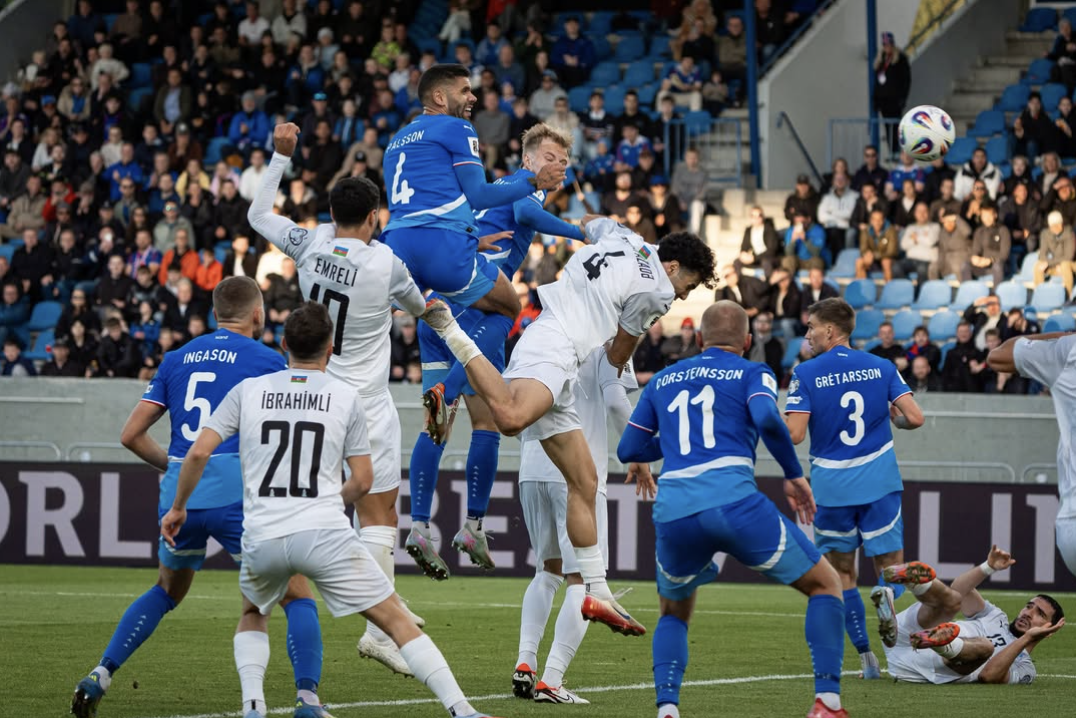 To begin, Canada will kick off this window with a matchup against Iceland on Saturday, March 28th, at BMO Field, in what will be a fascinating test for them.
On paper, this is Canada’s easier matchup this window, as Iceland enter this camp ranked 74th in the FIFA Rankings and 71st in the Elo ratings. Not only that, but after qualifying for the European Championships in 2016 and the World Cup in 2018, the first time that Iceland had ever qualified for each of those tournaments, they have yet to qualify for a major tournament this decade, either.
Yet, it’s clear that the Iceland team that caught European and global football by surprise at the end of the 2010s is a story of the past - and that’s to be expected, as it was always going to be hard for a country with a population of just over 400,000 people to sustain that sort of excellence long-term.
At the same time, it’s not as if Iceland have regressed a whole amount, either. They’ve continued to produce talent at an impressive rate, including some promising young players, which indicates that they could perhaps return to their past heights over the next few years if all goes well for them.
Plus, they remain a hard team to beat, thanks to their solid collective identity. While they failed to qualify for this World Cup after finishing third in their UEFA qualifying group behind France and Ukraine, they did draw France in this cycle, which is a pretty good achievement in isolation.
Because of that, you have to imagine that they’ll have their eyes on reaching the 2028 Euros, which doesn’t seem a far-fetched achievement for a team that has remained competitive in recent years, as seen by their World Cup qualifying campaign and various UEFA Nations League performances (they’ve remained in League B the last two campaigns after featuring in League A in the competition’s first two editions).
Returning to this window, though, they’ll hope to show a glimpse of what their future looks like, especially when they face this Canadian team.
Starting with a look at this Iceland squad, five players stand out, for two reasons - they are all under 25, and they all play for clubs in each of the top five European leagues. 
24-year-old goalkeeper Hákon Valdimarsson is under contract to Premier League side Brentford and has already made 20 appearances for Iceland, 23-year-old midfielder Ísak Bergmann Jóhannesson plays for Bundesliga side FC. Köln and already has 41 caps for his country, 24-year-old midfielder Mikael Egill Ellertsson plays for Serie A side Genoa and has 27 Iceland caps, 22-year-old winger Hákon Haraldsson plays for Ligue 1 side Lille and has 28 Iceland caps, and 21-year-old forward Orri Óskarsson plays for La Liga side Real Sociedad and has 16 caps for Iceland.
In particular, Haraldsson and Óskarsson are the two players to watch - Haroldsson, who played with Canada’s Jonathan David at Lille for two seasons, has 20 goals and 16 assists in 115 appearances for the French club, along with three goals and four assists for Iceland, while Óskarsson has 12 goals in 53 appearances for Sociedad (including five goals in 16 games in 2025-2026), after having scored 23 goals in 62 appearances for Danish side FC Cøpenhagen - and he has also found the net a remarkable seven times for Iceland.
Otherwise, some things to note are that while Iceland is quite young in midfield and higher up the pitch, they are quite experienced at the back - five of their defenders are 30 or older, which is quite impressive given that there are just seven players 30 or older in this squad.
Essentially, younger players have been given the keys to this team everywhere except at the back, although the pair of 25-year-old full-backs, Logi Tómasson (Samsunspor) and Dagur Dan Þórhallsson (CF Montréal), are trying to help change that.
In terms of their style of play, Iceland usually sits back a bit more without the ball, especially against teams comfortable in possession, although they’ve shown more of an ability to keep the ball than past Iceland teams, who would usually sit conservatively in a low block. 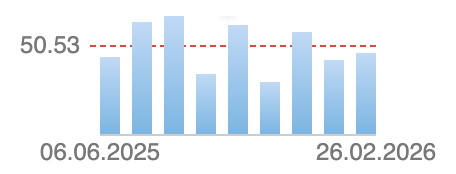
Here's Iceland's average possession numbers from the games they've played in the last year - as seen above, they don't really hold above 50% of the ball very often (WyScout)
As a result, in the last year, Iceland has typically averaged 51% possession, although they’re not ones to push up the field or press very high. Usually sitting in a 5-3-2 or 4-2-3-1, with the former being what they’ve used more lately, they like to be organized without the ball before sending numbers forward when they win it back.
It hasn’t always been as solid at the back for them, despite that, as they’ve allowed an average of 1.81 xG on 13.3 shots per game on average in the last 12 months, but those numbers are also inflated from the times they played teams like France, it must be remembered.
They’re still figuring out their offensive game, as they’ve averaged just 1.13 xG off 8.1 shots per match over the last year, so look for them to work on offensive combinations in this window, especially in terms of ensuring they provide opportunities for the in-form Óskarsson up front. 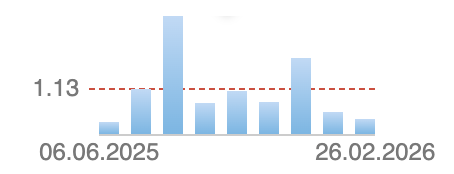
Here's Iceland's xG for numbers from the last calendar year, showing some of their struggles when it comes to generating chances (WyScout)
Because of that, this should be a good test for Canada. It must be remembered that Canada has struggled to break down teams that sit back without the ball, so Iceland will probably play a bit more cautiously, and dare Canada to beat them in possession instead of playing into their aggressive high press.
Tunisia:
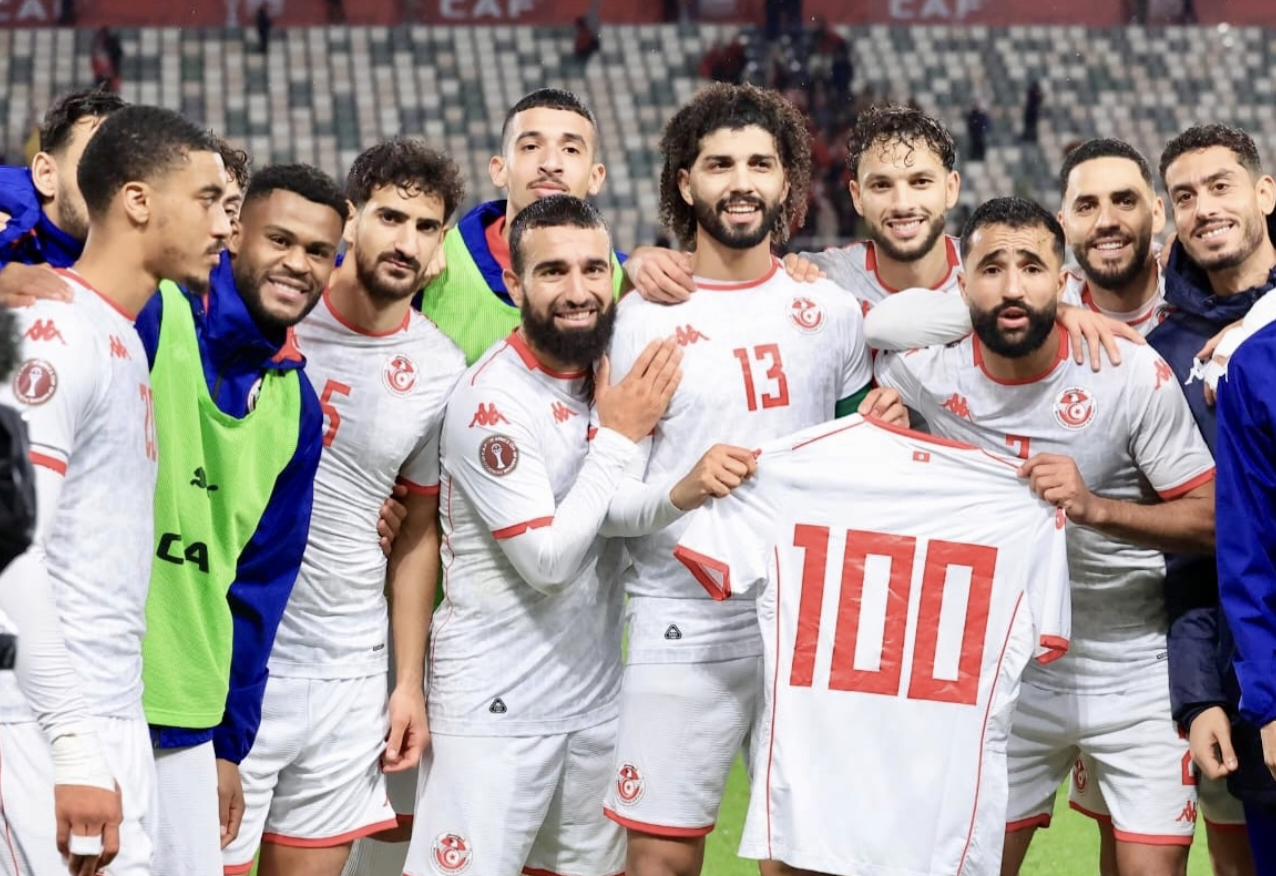 After their game against Iceland, Canada’s attention will shift to their matchup against Tunisia on Tuesday, March 31st, also at BMO Field.
There, a tough game awaits them, as Tunisia, who are ranked 47th in the FIFA Rankings and 61st in the Elo ratings, are never an easy team to face, despite what the numbers say.
They showed that in World Cup qualification, as they cruised through their group for CAF qualifying, winning nine and drawing one of the 10 games they played.
Granted, it’s worth noting that they didn’t have the toughest of groups, but given how tough it can be to qualify in Africa, it shouldn’t be taken for granted the way they cruised through their games despite that, scoring 22 goals and conceding zero across those 10 matches.
Unfortunately for them, their credentials did take a hit at the African Cup of Nations earlier this year. There, despite being expected to make a deep run in that tournament, they suffered a shock defeat in the Round of 16 against Mali, losing on penalties despite Mali having an early red card.
Yet, that shouldn’t fully take away from how good this Tunisia side can be. Having qualified for six out of the last eight World Cups and every AFCON since 1994, they’ve remained a constant in African football over the last few decades.
Now, though, they’d like to take a big step forward on the world’s stage. Despite having played in six World Cups, they’ve never reached the knockout stages of that tournament, something they’d love to change this summer, especially now that the tournament has 48 teams.
As a result, they should be plenty motivated for this window, especially this Canadian game. In a tough group with UEFA Path B winners (Ukraine, Sweden, Poland, Albania), Japan and the Netherlands, they won’t have an easy route to the knockout stage, so they’ll want to be in top form by the time the summer rolls around. 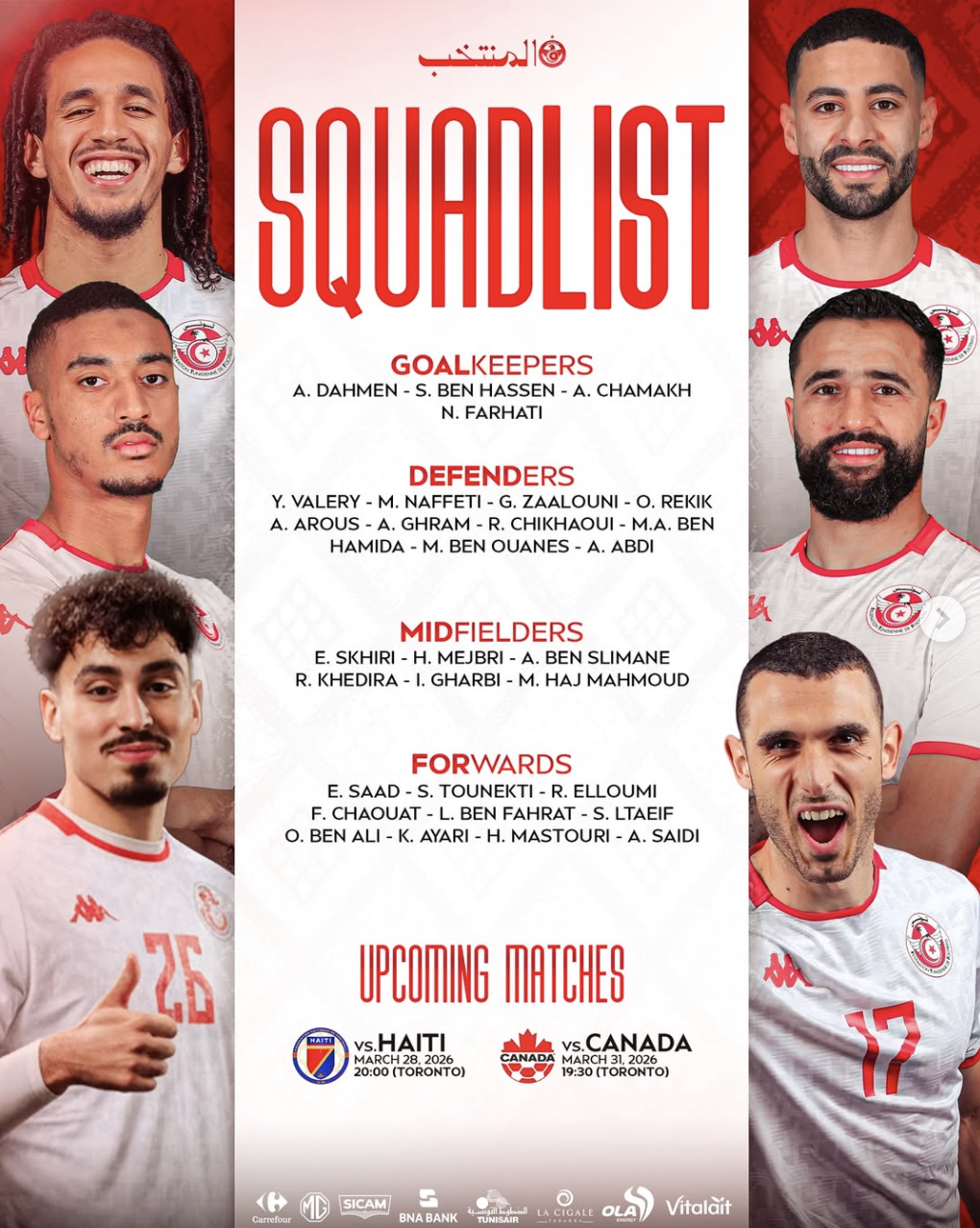
In terms of their team, they’ve got an interesting mix of older and younger players, and that’s reflected in the top-end of their squad. Veterans like the 32-year-old Ali Abdi (OGC Nice), 32-year-old Rani Khedira (Union Berlin) and 30-year-old Ellyes Skhiri (Eintracht Frankfurt), stand out, as do 25-year-old Anis Ben Slimane (Norwich City), 23-year-old Sebastian Tounetki (Celtic), 23-year-old Hannibal Mejbri (Burnley), and 21-year-old Ismaël Gharbi (Augsburg).
More specifically, while Abdi, Skhiri, Ben Slimane, Mejbri and Gharbi are more established regulars with several caps to their name, Khedira is a fun name to watch - the brother of former German World Cup winner, Sami Khedira, he only just recently committed to Tunisia, and is hoping to make his debut for them this camp.
Speaking of debuts, however, that’s something else to watch out for in this camp - eight players under 24 are included in Tunisia’s squad this window, including Paris Saint-Germain youngster Khalil Ayari, and, more interestingly, Vancouver Whitecaps forward Rayan Elloumi, who represented Canada during their January camp earlier this year.
Clearly, Tunisia is pushing to complement their squad with some younger players, and will hope to integrate some of those players during this camp.
As for their style of play, Tunisia typically likes to play a bit more of an aggressive style on the ball, holding over 55% of possession in matches over the past 12 months. At the same time, it’s worth noting that they’ve faced some challenges as of late when it comes to breaking down teams that sit back against them, as seen in their Mali game at AFCON, as well as a draw to Tanzania at that tournament. 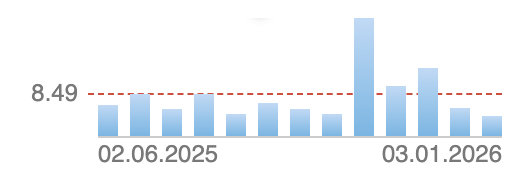
Here's Tunisia's pressing metrics from the last calendar year (using PPDA), showing that they've not minded playing a bit more conservatively, if needed, although they have had a stretch of more aggressive games as of late (WyScout)
On the flip side, Tunisia have also had some success when it comes to sitting back and playing more on the counter - they drew Brazil 1-1 last fall in a friendly where they held just over 30% of possession.
What that shows, though, is the challenge Tunisia faces ahead of the World Cup. In qualifying, they were able to play a lot more aggressively due to the lack of quality teams in their group, but since then, they’ve not been able to replicate that same approach against better teams.
Because of that, they might be tempted to play a lot more defensively against Canada, both to benefit their team and to frustrate Canada, given their aforementioned struggles against low blocks. 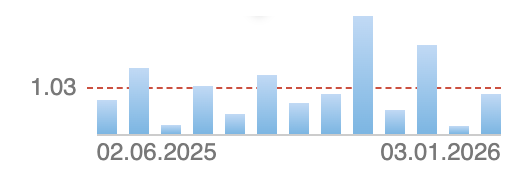
Here's a look at Tunisia's xG numbers against from the last calendar year, showing the success they've had defensively (WyScout)
For what it’s worth, given the presence of some strong midfielders, Tunisia could also be rather flexible tactically. Usually sticking with a 4-3-3, it’s possible that they let their midfielders dictate the game and decide whether or not they play more aggressively, or sit back more, depending on how things go for them.
Overall, though, it’s expected that they’re organized and disciplined, no matter how they play - showing why they’ve been such a consistent team in Africa over the last few decades.
Canada:
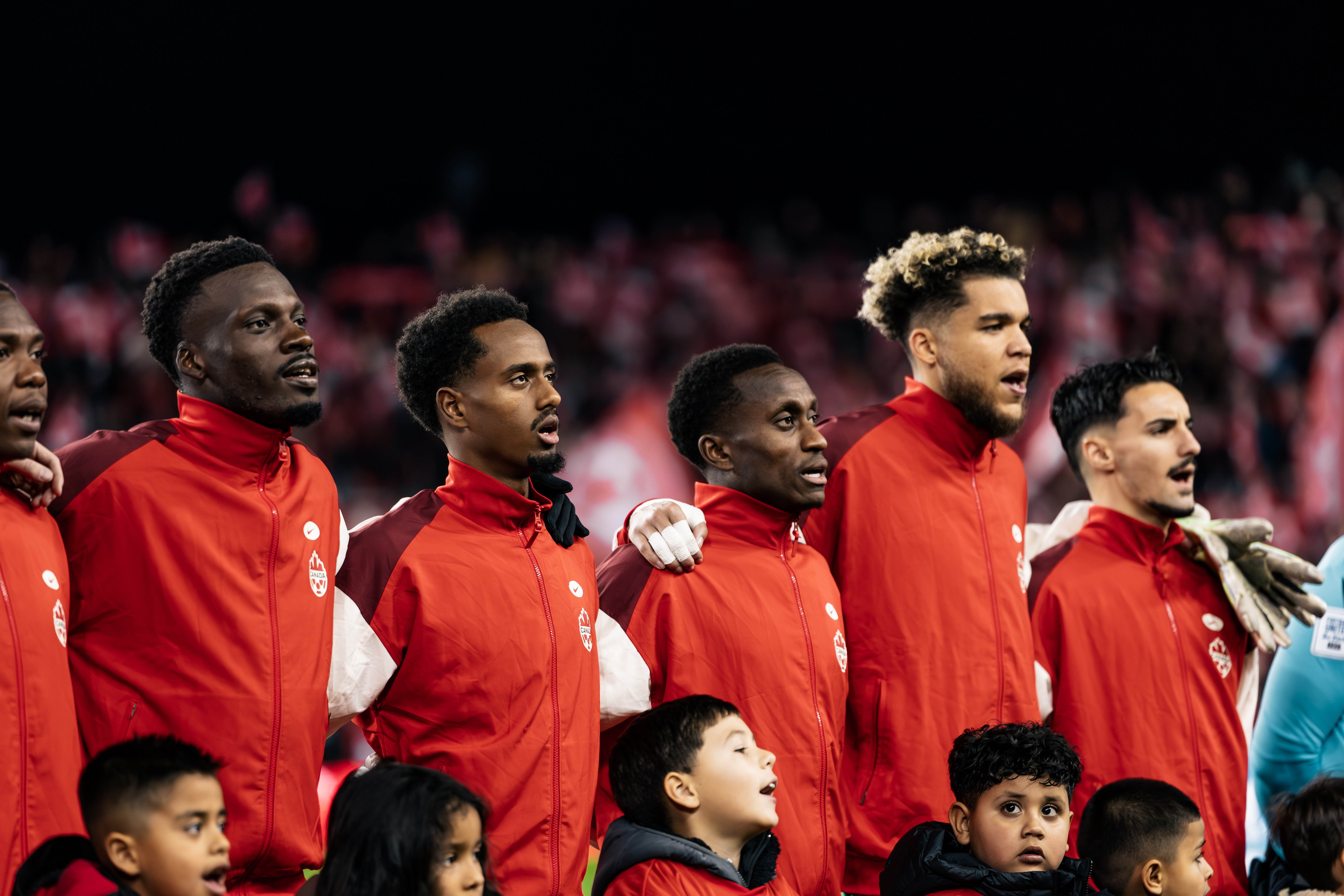 Based on the above, you can see that while Canada won’t be facing any top 30 teams in the world this window, two tough games await them.
In particular, it stands out that Iceland is expected to play in a lower block, with Tunisia also potentially employing a similar style, as that’ll offer a good chance for Canada to get used to playing against teams like that, having struggled to do so before.
Yet, that shows the value of these games. When they were first announced, it was frustrating not to see any bigger opponents on the docket, as it felt like Canada could also use a match or two to test themselves against a marquee team.
At the same time, with how Canada plays, their style of play can be easily replicated against bigger teams who tend to hold the ball and dominate possession, whereas Canada has struggled against teams that dare them to carry the initiative.
Heading into the World Cup, Canada could be expected to be on the front foot for a large chunk of their three group stage games against UEFA Path A team (Italy, Wales, Bosnia & Herzegovina, Northern Ireland), Switzerland and Qatar, so this will offer them good practice in that regard.
Because of that, look for them to show off good possession patterns and improved final third play. Of course, they’ll still want to press high up the pitch and be good in transition, but typically, that hasn’t been an area of worry in their game over the last 12 months. 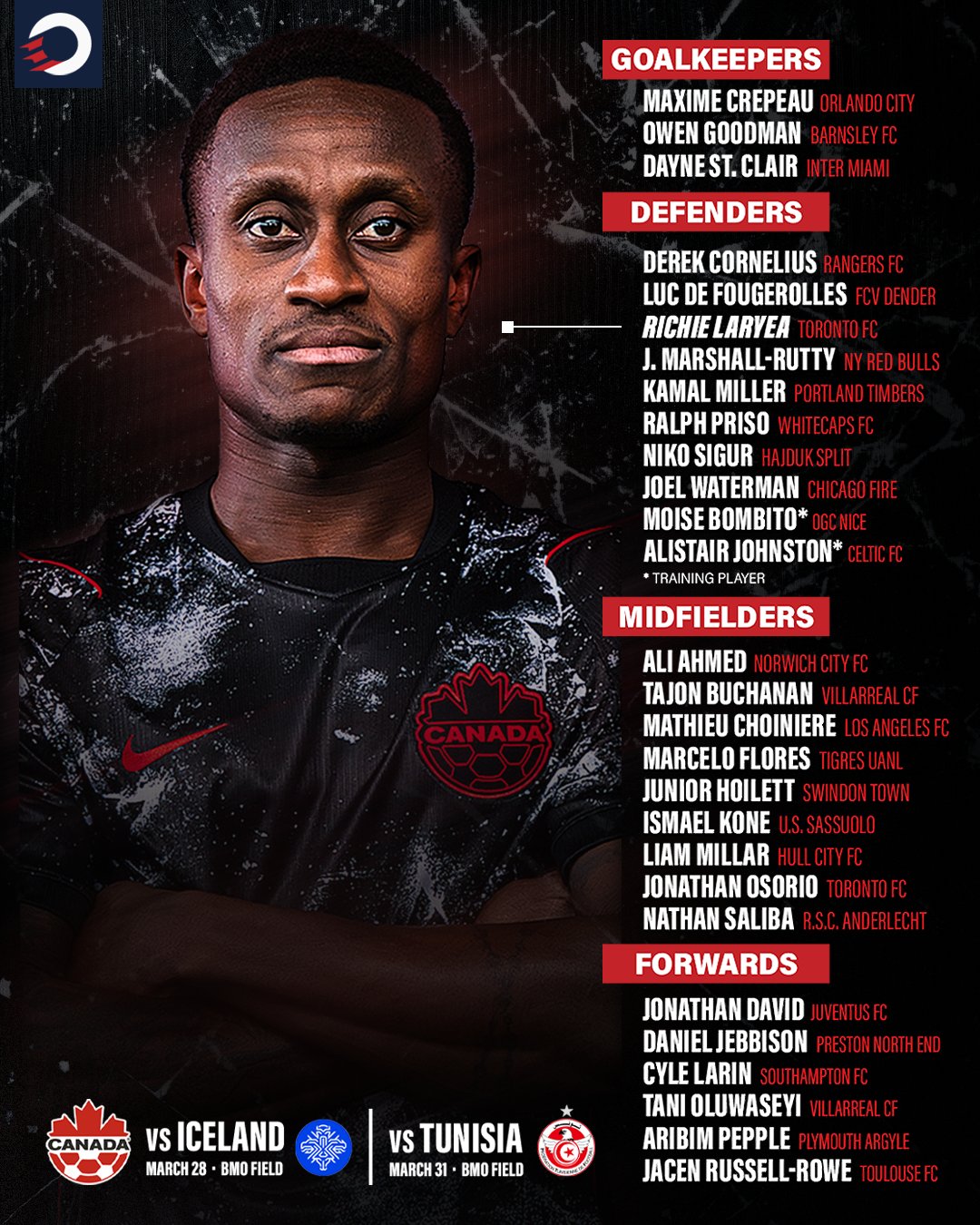
From there, they’ll want to keep their eye on certain individual battles. With the absence of some key players in this camp, such as Alphonso Davies, Stephen Eustáquio, Moïse Bombito and Alistair Johnston (the latter two are in the camp but only as training players), this will be a good chance for some defenders and midfielders to step up, too.
Then, up front, with the varied form of Canada’s strikers, this will also be a good chance for Marsch to get some more clarity when it comes to his team’s attacking situation. Since last September, no forward has really stepped up as hoped while wearing the Canadian shirt, which has kept the door open at the position.
Jonathan David remains a lock to start and earn significant minutes up front, even despite his mixed form for Juventus, but who pairs alongside him is a mystery. Tani Oluwaseyi has been the favourite but hasn’t played a lot at the club level with Villarreal CF lately, while Promise David was a frontrunner to earn significant minutes until a recent injury.
Cyle Larin has been in great form lately and should earn an opportunity, but he’s struggled to score for Canada over the last few years, while the rest of the options, such as Jacen Russell-Rowe and Aribim Pepple, are relatively unproven (although it helps Russell-Rowe that he scored in Canada’s January Camp game vs. Guatemala earlier this year).
So overall, this camp will be about two things for Canada: finding some more tactical clarity against two opponents that should prepare them well for what they might face this summer, and then getting some clarity about individual battles.
Because of that, no matter if they win or lose, look for them to address those two things - and if they can get two positive results on top of that, that’ll be a big bonus.