Jesse Marsch called 2026 World Cup squad "best CanMNT ever"... do the numbers agree?



On Friday, the CanMNT revealed their World Cup squad, as they announced which 26 players will represent their country at a home World Cup this summer.
Or at least, that was the plan. Such has been Canada’s luck with injuries over the last year, it only took 24 hours for one of those 26 players to be ruled out; winger Marcelo Flores tore his ACL while playing for Tigres UANL in the 2026 Concacaf Champions Cup final the day after the squad was released.
But, while Flores’s absence is a huge blow, given that he was supposed to be a crucial wild card for head coach Jesse Marsch’s side, it’s a reflection of Canada’s growing depth that they’ll be able to replace him more than adequately. They might struggle to replicate the dynamism that Flores was supposed to bring into the squad, but when looking at the attackers that they left out, such as Jacen Russell-Rowe, Daniel Jebbison, Theo Bair and Jayden Nelson, to name a few, they’ve got a decent wealth of options to pick from as they ponder a replacement.
Just look at that group of four, which includes three players currently contracted to teams in the top five leagues. Not that long ago, players of their calibre would be shoo-ins to start for Canada, and now they’re not even able to crack Canada’s 26-player squad.
Yet, that shows why in the aftermath of his squad announcement, Marsch said something that he has started to mention a lot lately, saying that it was probably “the best squad” the CanMNT have ever named.
"This is probably the best 26-man squad that Canada has ever put together."
— OneSoccer (@onesoccer) May 30, 2026
Just moments after naming his CanMNT 🇨🇦 squad for the World Cup, Jesse Marsch checks in with Kristian Jack to offer his assessment of the final selection 🎙️ pic.twitter.com/VIJxyXFmxm
And while that’s a bold claim for a manager to make about a team that hasn’t kicked a ball yet, it’s hard to argue with him. You might be able to nitpick the semantics and general nature of the statement, as it’d be unfair to a side like the 2000 Gold Cup team, or the work done by the team that qualified for the 2022 World Cup, to completely leave them out of this discussion until we see what this 2026 team accomplishes, but on paper, there is some merit to his words.
To that point, it’s fascinating to see how this team stacks up when compared to the 2022 World Cup team, helping give an idea of what makes Marsch so confident about this group, one that has grown a lot in just the past three and a half years.
For example, one thing that Marsch has also touted in the follow-up of this squad announcement is that this team has gotten significantly younger over the last few years - the 2026 team has an average age of 25.48, whereas the 2022 team was closer to 27 years of age on average (26.92).
That’s key, as it means that most of this team is either in their prime or about to hit it, meaning that this tournament can be more of a launching pad event than a peak for this team, should they capitalize on the opportunity properly. 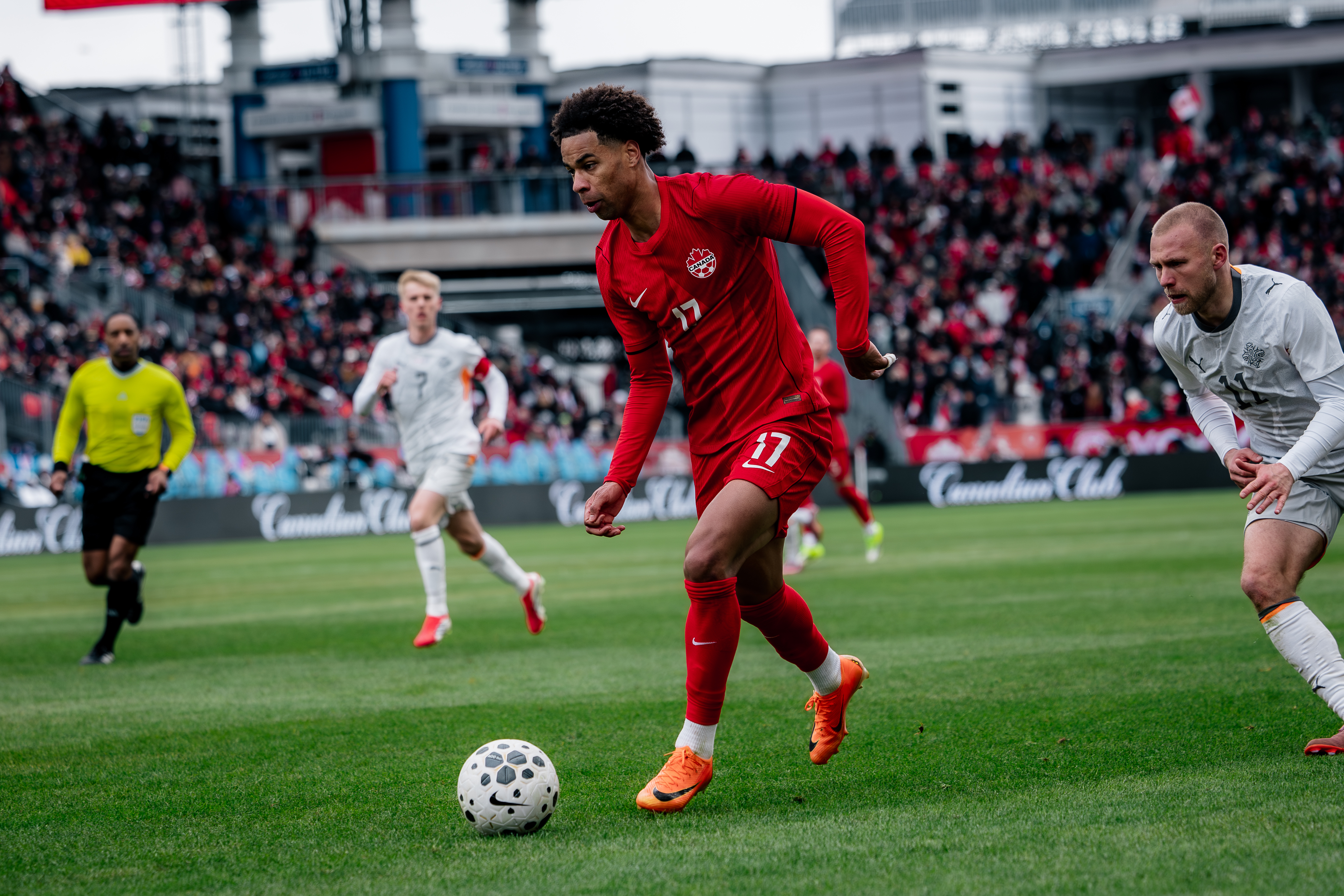
Despite this youth movement, though, this team has done a good job of accumulating experience over the last few years, showing the work they’ve done to develop a core group of players that has grown up together. On the 2026 team, there are eight players with 50+ caps and just three with 10 or fewer caps - in 2022, Canada had six players with 50+ caps, compared to six players with 10 or fewer caps.
Plus, of those who had 50 caps in 2022, just two, Jonathan Osorio and Cyle Larin, are in this World Cup squad, which shows how Canada has been able to accumulate experience in recent years. Especially with the growth of players such as Jonathan David (75 caps), Tajon Buchanan (58 caps), Alphonso Davies (58 caps), Alistair Johnston (56 caps) and Stephen Eustaquio (54 caps), who were all crucial players in Qatar and remain so in 2026, having all emerged as leaders on this team in recent years.
Speaking of that group of players, however, that’s the other area that stands out when looking at this squad - it’s impressive to see how many Canadians are playing in bigger clubs and bigger leagues compared to 2022.
For example, this year, Canada has 17 players in Europe, including seven in top five European leagues - in 2022, they had 15 players in Europe, but just three playing in top five leagues (for context, this is based on where players were playing in the lead-up to each tournament).
And that number undersells things, to be honest. You can see that when using the lens of “tier one players”, which was a favourite adage of 2022 CanMNT head coach John Herdman.
In his words, those were players who were playing in the top five leagues or for clubs in other leagues that regularly featured in the UEFA Champions League (and to a lesser extent, the UEFA Europa League).
On the 2022 squad, Canada had 10 players contracted to such clubs, whereas in 2026, they’ve got 14, and that 14 doesn’t include players on the cusp of being ‘tier 1’ such as Nathan Saliba, Niko Sigur, Ali Ahmed and Aflie Jones.
Using that ‘tier 1’ definition is an imperfect methodology, no doubt, as players like Owen Goodman and Luc De Fougerolles are considered ‘tier 1 players’ after being loaned out from Premier League sides to teams in smaller leagues whereas the likes of Saliba, Sigur, Ahmed and Jones aren’t, but that still helps show that Canada’s got more and more players playing at higher levels. 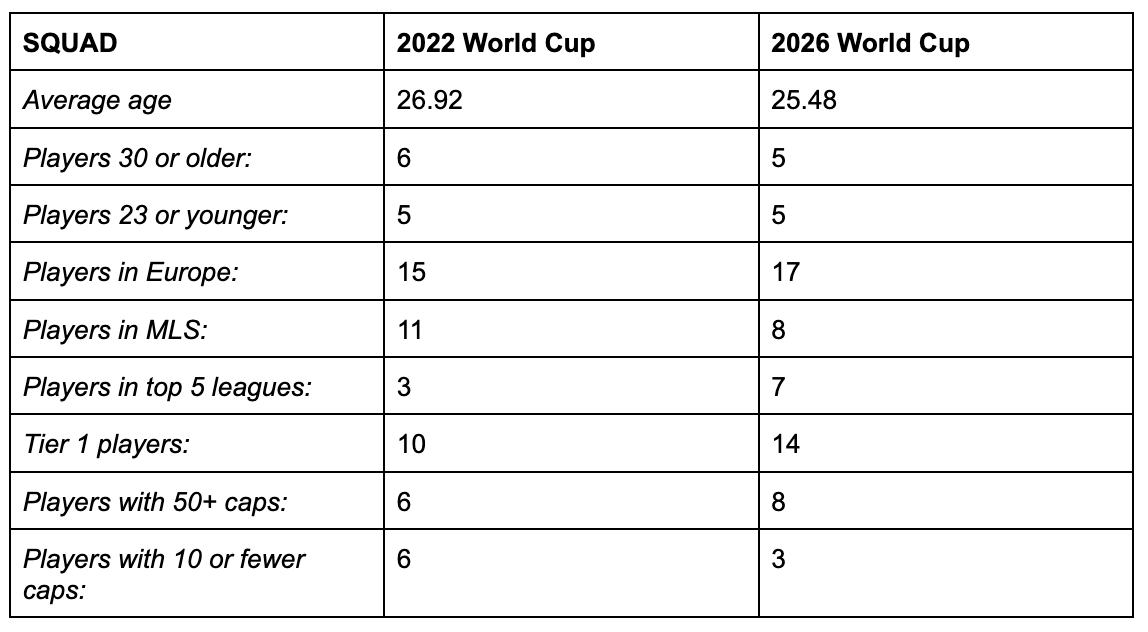
Here's a look at how the CanMNT's 2022 World Cup squad compares to the 2026 World Cup squad. For the 2022 squad, the players who ended up being the final team were counted, while for the 2026 squad, Marcelo Flores was excluded from the data, meaning that just 25 players were factored in with his replacement also still yet to be named as of writing.
Plus, more importantly, Canada’s got a wider range of players playing at higher levels, which is what’s quite good to see. At almost every position, they now have multiple ‘tier 1 players’, including at centre back, which was a big problem area for Canada back in 2022.
In fact, other than in goal, they’ve got at least two ‘tier 1’ players at every other position (full back, centre back, midfield, winger and striker), which is quite impressive (and perhaps further shows why there is some apprehension about Canada’s goalkeeper situation heading into the World Cup).
Before, Canada would be impacted a lot more by the absence of their top-end players, as seen when they lost Stephen Eustáquio during the 2022 World Cup, an injury that completely stalled their tournament.
That’s not to say they wouldn’t be negatively impacted by injuries if something similar were to happen in 2026 - that can be said about every team in the world - but they’re a lot better equipped to handle something like that now than they were before. That they’ve still been able to put in good performances despite some of the injuries they’ve dealt with over the last year shows that.
What this all shows, however, is why Marsch is so confident in anointing this group as the best the CanMNT has ever called up. Certainly, on paper, his comments have some merit, which is extremely exciting to see heading into a home World Cup. 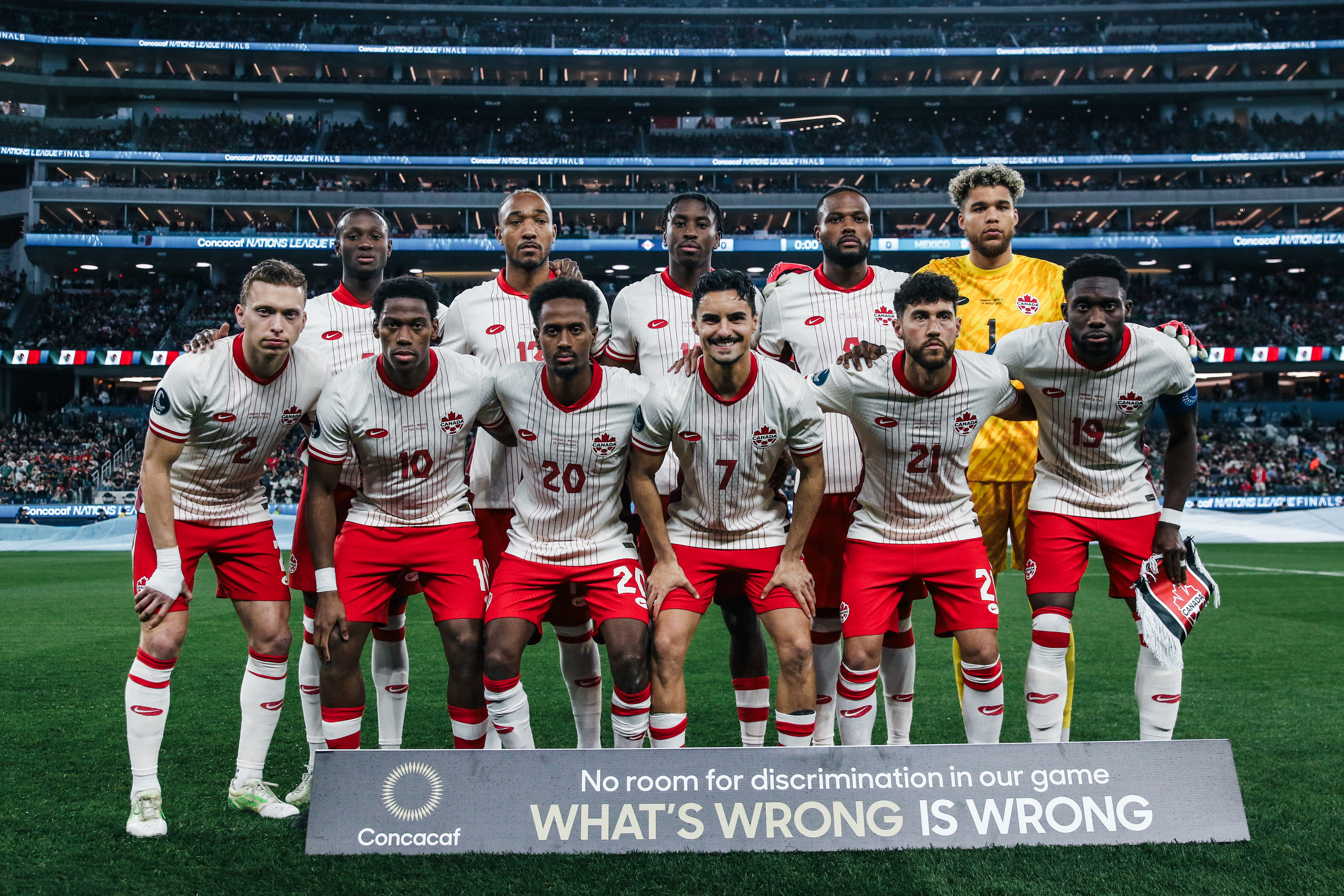
Now, some factors could hinder this team’s ability to play to their full potential this summer, including their ongoing injury crisis, but what this shows is that if Canada can get past that and live up to what they’ve built on paper, they can do some damage.
That’s huge, and exactly what you want to see from a co-host heading into a tournament of this magnitude. It highlights the work that has been done to push this team to this level, starting before Marsch even arrived and accelerated things, and why Canadians have every reason to be excited about what this team can accomplish at this tournament (and going forward!).
“Yeah, I would say I felt, when I looked at the names on the board that we put up the last night (before the roster reveal), I felt right away that this was our current best squad, and then probably one of the best squads, if not the best squad, that Canada has ever had,” Marsch said.
“I think everything from pushing the high-end talent that had already been established within this program over the last two years, along with incorporating some good young players into what we've done, and developing them through the national team and through some transfers to bigger clubs, and then the addition of some important dual nationals has has led to having not just a really strong squad, but an incredibly balanced squad in every position, too,” he continued.
“(At every position), we are at least two deep, with strong players that are ready to go at any moment, which means that even though not every player is at 100% fitness or in form, we know that we have enough quality and flexibility within the squad of how we can use different players in different positions so that we can be ready for any match in any opponent,” he finished. “That’s a great feeling as a coach to have, so we should be really proud as Canadians of what we have here, and we should celebrate this team and be ready for them to now put on some really good performances.”