GROUP B WATCH: Qatar stun Switzerland with late draw in tournament opener


Qatar have earned their first point at a World Cup, as they scored a late equalizer against Switzerland in their tournament opener to earn a 1-1 draw, one that completely blows open Group B.
With that, it leaves everyone in Group B on one point after one matchday, which is massive news for the CanMNT, who drew Bosnia & Herzegovina in the other Group B matchup on Friday.
Now, that gives Canada increased odds of winning the group, especially if they can beat Qatar in their next game. Of course, based on what Qatar showed in their matchup against Switzerland, that’ll be easier said than done, but after Canada put in a confident showing against Bosnia, they’ll feel they have what it takes to find a victory against Qatar on June 18th.
FT' | FINAL SCORE 🏆
— OneSoccer (@onesoccer) June 13, 2026
Qatar 🇶🇦 SHOCKS Switzerland 🇨🇭 with a 95th-minute equalizer and Group B is now WIDE OPEN 🤯#CanMNT fans, how we feeling after seeing 90 minutes of our next two opponents? 👀 pic.twitter.com/BnsIKOviPK
If anything, though, that’s the big lesson that one can take from this Switzerland vs. Qatar game, and it’s the reminder that there are no truly easy games at the World Cup, no matter how things look on paper. All it takes is for one team to have an off-day, and for the other to have the game of their lives, and a fixture can absolutely be flipped on its head.
With that in mind, here’s a look at what Canada can learn from this Switzerland vs. Qatar matchup, as they get set to face both opponents in their next two group stage games in Vancouver over the next few weeks.
What Canada learned about Qatar:
Firstly, with their matchup against Qatar coming up this week, Canada will have kept a close eye on the two-time defending Asian Cup champions, who showed great resilience in this performance.
Having conceded just 17 minutes into the match, as they gave away a penalty that Switzerland’s Breel Embolo coolly dispatched, Qatar had looked down and out for most of the match after that.
Given that they had missed a massive chance early in the game, as Qatari attacker Edmílson Junior completely scuffed a breakaway after a sloppy Switzerland defensive mistake, it had seemed like they had squandered their opportunity to cause an upset.
Once Switzerland scored, they shifted into high gear, as they pushed in search of a second, one they seemed likely to find.
Yet, to Qatar’s credit, they survived the onslaught. Despite allowing 26 shots, 3.24 xG and six big chances from the Swiss, Qatar didn’t concede the rest of the match, which kept them alive right until the very end.
With that, it gave them the chance to push for an equalizer late on, and they were rewarded for their bravery with that goal, which came from the head of centre back Boualem Khoukhi, who pushed forward with the hopes that he could play the hero - which, to his credit, he absolutely did.
QATAR EQUALIZE IN THE DYING SECONDS OF THE MATCH! 🇶🇦🤯 #FIFAWorldCup pic.twitter.com/oqFv3ogEkx
— TSN (@TSN_Sports) June 13, 2026
At the same time, however, it’s worth noting that while Qatar did well to craft an equalizer, they were extremely lucky to not be trailing by multiple goals by that stage. They were extremely vulnerable defensively in this game, as they struggled to track the Swiss attacking patterns of play.
The numbers further show that, as Switzerland had 42 touches and 18 shots inside Qatar’s box, which is less than ideal from a defensive perspective.
Qatar did have some heroic defensive moments, to be fair - they had eight blocks, with their centre backs, Khoukhi and Pedro Miguel, also combining for 25 defensive interventions - but this felt like a game where the bigger story was the chances that Switzerland squandered more than anything. 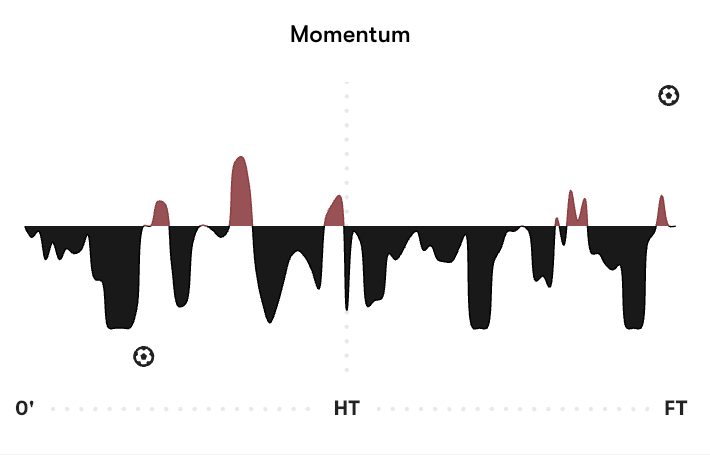
Here's the attacking momentum map from this game, showing that Switzerland (in black) spent most of the match on the front foot (FotMob)
From a Canadian perspective, one big thing that stood out was that there was a lot of space to exploit in wide areas. Qatar chose to defend in a 4-3-3, which allowed Switzerland to see a lot of the ball out wide, where they did extremely well to create a lot of dangerous overloads.
In particular, the Swiss duo of Rubén Vargas and Dan Ndoye, who played underneath Embolo as flexible wingers/#10s in a 3-4-2-1, had some great runs off the ball, as their movement caused all sorts of problems for the Qatari defenders - which then opened up space for Switzerland’s midfielders, wing backs and sometimes even centre backs to run forward into.
Otherwise, it stood out that Qatar struggled to hold onto the ball, as they had just 32% of possession and completed only 72% of their passes. There were a lot of moments where they might’ve been better served to slow down the tempo, given the amount of defending they had to do, but they instead launched a lot of long balls that they had no shot of winning. 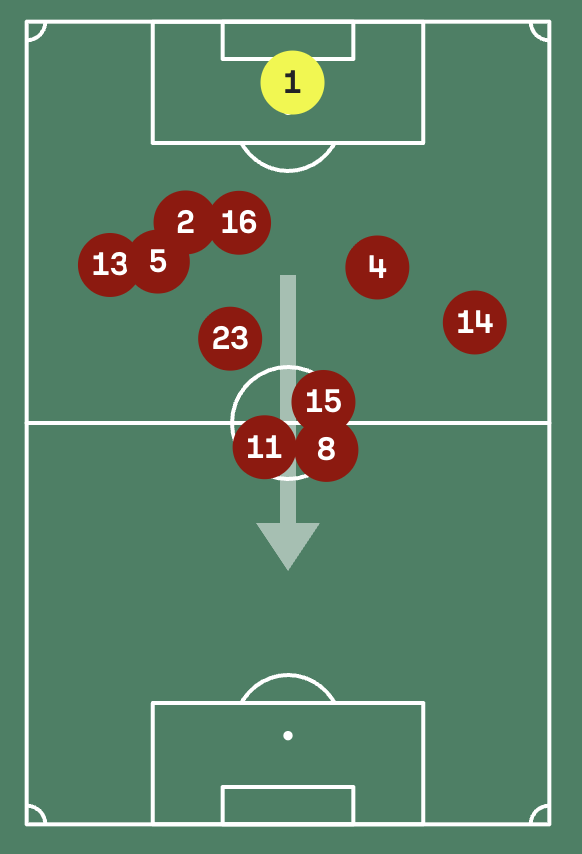
Here's Qatar's average formation from this game, showing that they spent most of the game pinned back in their own half with and without the ball (SofaScore)
Because of that, the key for Canada to beat Qatar will be ensuring that they can use their movement to create the sort of chances Switzerland did, while making sure that they actually finish those opportunities - it’s relevant to note that given that Canada struggled in front of goal in their draw against Bosnia, after all. 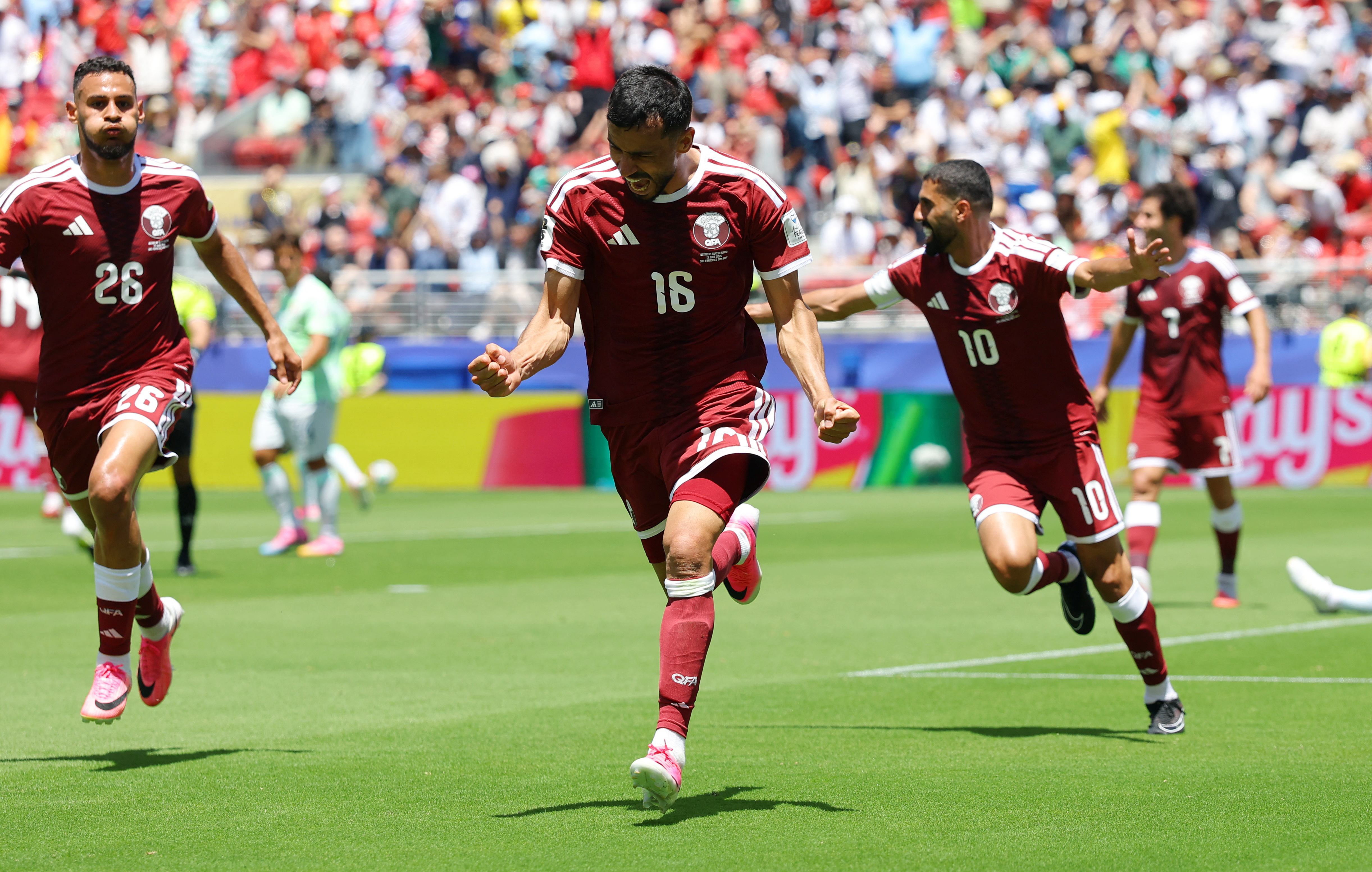
What Canada learned about Switzerland:
Of course, with Canada then set to face Switzerland on June 24th in Vancouver, they’ll have also been keeping a close eye on them in this game, too, especially considering how big that matchup has the potential to be.
Should both Canada and Switzerland win their next matches, as they’re expected to do on paper, that June 24th game could be a battle to win the group, which would allow that team to stay in Vancouver - a huge advantage for Canada, in particular, who would benefit massively from staying on home soil, with the fact that they’d stay in Vancouver also being a bonus due to the presence of their base camp in the city.
Granted, if Switzerland are going to want to win their group, they’ve got to be much better in front of goal than they were against Qatar, as that was ultimately the lone reason they drew this game. While they’ll perhaps feel they could’ve defended Qatar’s goal a little better than they did (which feels harsh given that it was an incredible header from Khoukhi), the reality is that this game should’ve been over well before that goal even happened.
The offensive stats showed that - as mentioned earlier, Switzerland generated 3.24 xG on 26 shots, including 2.46 non-penalty xG on 25 attempts, and those six big chances.
BREEL EMBOLO SLOTS HOME THE PENALTY!
— TSN (@TSN_Sports) June 13, 2026
Switzerland takes a 1-0 lead over Qatar! 🇨🇭 #FIFAWorldCup pic.twitter.com/4wH8UeZtmn
Yet, to sum up their struggles in front of goal, they turned that 3.24 xG into just 1.47 xG on target (xGOT), as a lot of their attempts either missed the goal or were quite easy for Qatar goalkeeper Mahmud Abunada to save. 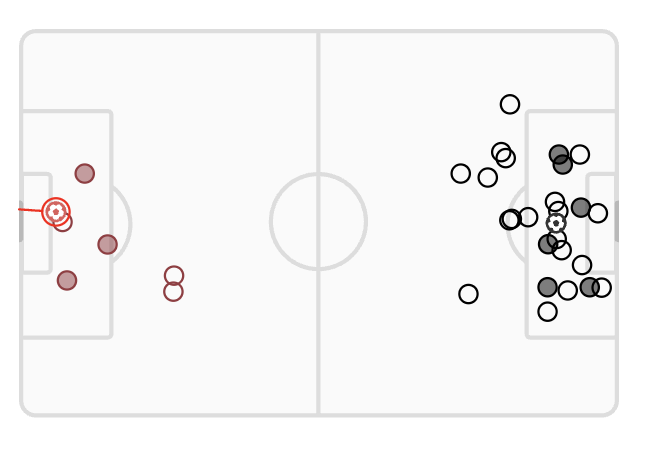
Here's the shot map from this game - as seen here, Switzerland (in black) did everything but put the ball in the net, seemingly (FotMob)
Their attacking movement was great, as mentioned earlier, but that won’t console them when they consider the chances they squandered in front of goal.
From a Canadian perspective, one thing that stood out was the performance of Breel Embolo - not only did the Swiss striker score the penalty, but he also helped create five chances (finishing with 0.87 xA!), as his hold-up play caused all sorts of problems for Qatar’s defence.
Perhaps, given the struggles of some of the other Swiss players in front of goal, such as Ndoye, who had 0.4 xG from five shots, and Vargas, who had 0.36 xG from two shots (although he also created five chances worth 0.59 xA), they’ll have wanted to get Embolo in better shooting positions, as of his four shots, two were blocked, and the other was the penalty.
Otherwise, the only big takeaway from a Swiss perspective is the way the heat really seemed to affect them, as they did seem to get sluggish as the game went on. That’s not surprising, though, given that this match was played at noon local time in San Francisco.
With Qatar being perhaps a bit more used to that weather, that’s why they were able to capitalize on the way Switzerland faded late in the match.
To be fair, that won’t affect Canada too much - with their matchup being at the domed BC Place in Vancouver, the sun won’t be as much of a problem in their match against Switzerland (although the heat might play a bit of a factor). Plus, with Switzerland’s game against Bosnia being at the climate-controlled stadium in Los Angeles, the weather shouldn’t be as much of a factor in that game as it was in this one, either.
So overall, Canada will need to make sure that they do a better job of tracking Switzerland’s attacking movements, while also ensuring that they limit the opportunity for Embolo to get on the ball and hold up play. Otherwise, it must be noted that with how aggressively Switzerland were attacking, they left some big gaps to run into on transition, which Qatar struggled to capitalize on, but Canada might be better suited to do that given their strengths on the counter-attack. 
Here's Switzerland's average formation from this game, showing how aggressive they were in the attack (SofaScore)
Granted, Switzerland will be well aware of Canada’s prowess there, so it’s unlikely that they employ a bit more of a cautious defensive approach, which they’re typically more known for - if that’s the case, Canada’s focus will need to shift more towards what they do on the ball than off it, although the speed of Ndoye and Vargas in transition would remain something to be wary of defensively.
Because of that, though, don't be surprised if Switzerland ponders a formation shift for the Canada matchup, as they went with an aggressive 3-4-2-1 in this game - a return to their preferred 4-3-3 could give them a bit more solidity off the ball. 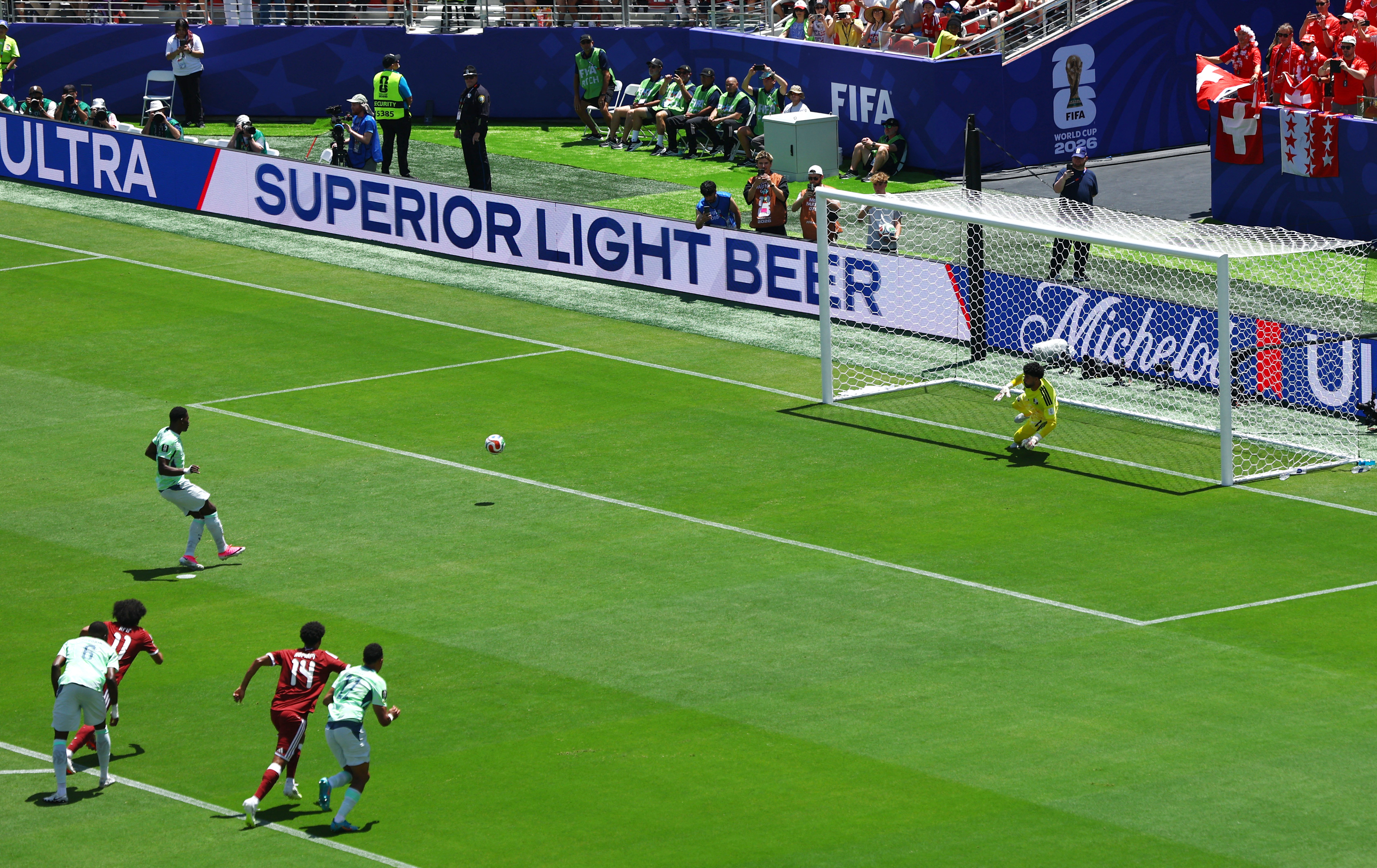
What to watch out for on matchday #2:
After this first set of results, there’s a lot to watch out for in this second matchday of Group B.
Firstly, the matchup between Switzerland and Bosnia & Herzegovina just got a lot more interesting. Given how well Bosnia defended against Canada, they’ll feel that they can frustrate Switzerland’s attack, especially when seeing the way they struggled to score against Qatar.
Plus, when seeing the way Switzerland struggled in the air on Qatar’s equalizer, Bosnia will feel confident that they can use their aerial prowess to score some goals, too, having scored from a corner against Canada.
Then, in the matchup between Canada and Qatar, it’ll be interesting to see if Canada can build on what they did against Bosnia, while Qatar will look to use the momentum they earned from this late equalizer to put in a much sharper performance on both sides of the ball. With Canada’s finishing woes, Qatar will feel they can frustrate them, especially if they can do a better job of closing down space in wide areas.
With Canada being at home, they’ll also face the pressure of needing to perform in front of their home crowd, which could either help or hurt them. Given that many were circling this Qatar match as a one where Canada could find their first win at a men’s World Cup tournament, they’ll want to channel that pressure in the right way, knowing how historic this game could be for them.
Overall, though, it’ll be fascinating to see how this matchday plays out, as it could prove to be decisive when it comes to determining who wins this group. For any team that can grab a win, that’ll put them on the front foot heading into the last matchday, with no team sitting in the driver’s seat quite yet after this set of draws.
That’s huge news for Canada, given their position as co-hosts - now, they’ll have to prove that they can overcome the pressure that comes with that responsibility and get that first tournament win against Qatar, a result that would put them in an optimal position to win this group (and all but guarantee that they can qualify for the knockout stages for the first time).