What we learned from Alphonso Davies's first start of 2025-2026 for Bayern Munich


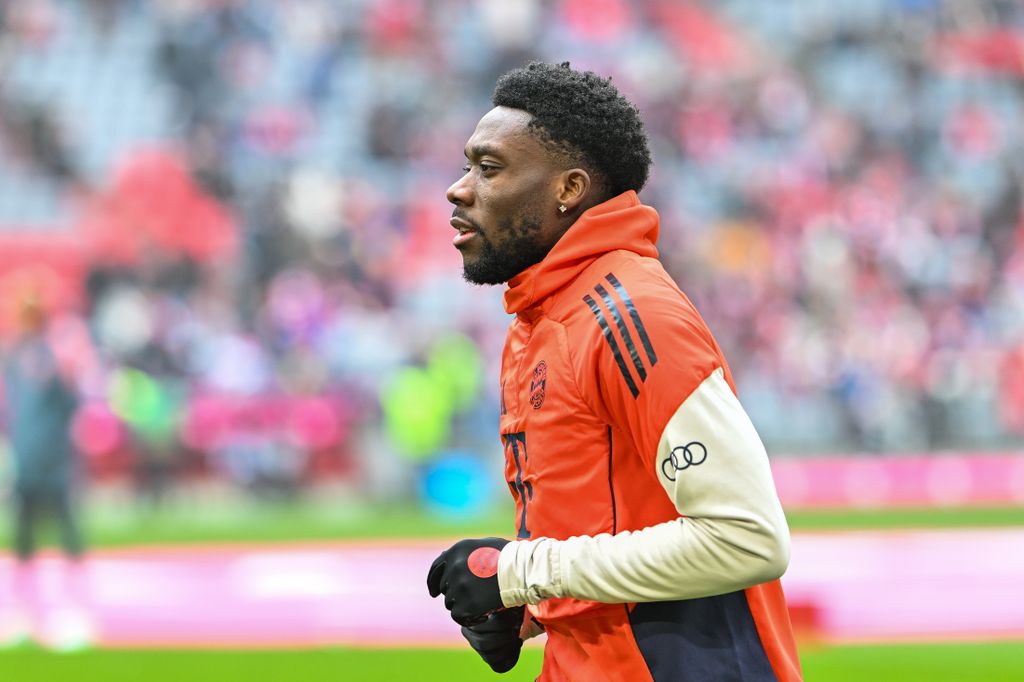
In news that will please several CanMNT fans, Bayern Munich started Alphonso Davies in their match against FC Augsburg this past weekend, giving him his first start since tearing his ACL last March.
After making five appearances off the bench since returning from injury in December, this was a big milestone for Davies, who went 60 minutes in his first start, too, although it came in a losing effort as Augsburg won 2-1 (both goals did come after Davies exited, however).
After 261 days out injured, CanMNT 🇨🇦 star Alphonso Davies is BACK for Bayern Munich 😎 pic.twitter.com/6aSA8ifH6O
— OneSoccer (@onesoccer) December 9, 2025
Naturally, as one would expect, he looked a bit rusty at times, but he grew into the game quite nicely and had some good moments.
Surprisingly, though, in a move that offers a glimpse of the journey he faces toward becoming a regular starter again, Davies played at right back, with Hiroki Ito, who is also a natural left-sided player, occupying Davies’s preferred left back position.
That posed a new challenge for Davies, who had actually never featured at the position before, period - according to Transfermarkt, he’s played 202 games at left back, 22 games as a left wing back, 45 games as a left winger, 16 games as a right winger, and even one game as a centre back, but never at right back.
Phonzie's BACK 😎
— OneSoccer (@onesoccer) January 24, 2026
Here are some key stats from the CanMNT 🇨🇦 captain as he makes his return to the Bayern Munich starting XI for 61 minutes of Bundesliga action 🇩🇪 pic.twitter.com/oSJAL2UFcK
Yet, it appeared to be a complement to Davies’s defensive ability, as he was tasked with covering for starting right winger, Michael Olise, who is a little less willing to track back and help his full back defensively than left winger Luis Díaz, who offered a lot of support for Ito.
With Bayern’s right side being quite staggered through the presence of both Olise and Lennart Karl (who played as a #10 but often drifted to the right), Davies brought a bit of a calmer defensive presence to that area of the pitch. That was shown in the fact that he made eight recoveries and one tackle in his 60 minutes, although he wasn’t as strong in the duels yet, winning just three out of eight.
By comparison, Ito finished with no tackles and one recovery, although he did chip in with three clearances, one recovery and won five out of six duels (four of them being aerial duels), showing the different tasks asked of them in their respective positions.
In particular, when watching back the match, it’s worth noting that Davies did an excellent job of stepping up the field and squeezing space away from Augsburg, denying them an outlet up that right-hand side. 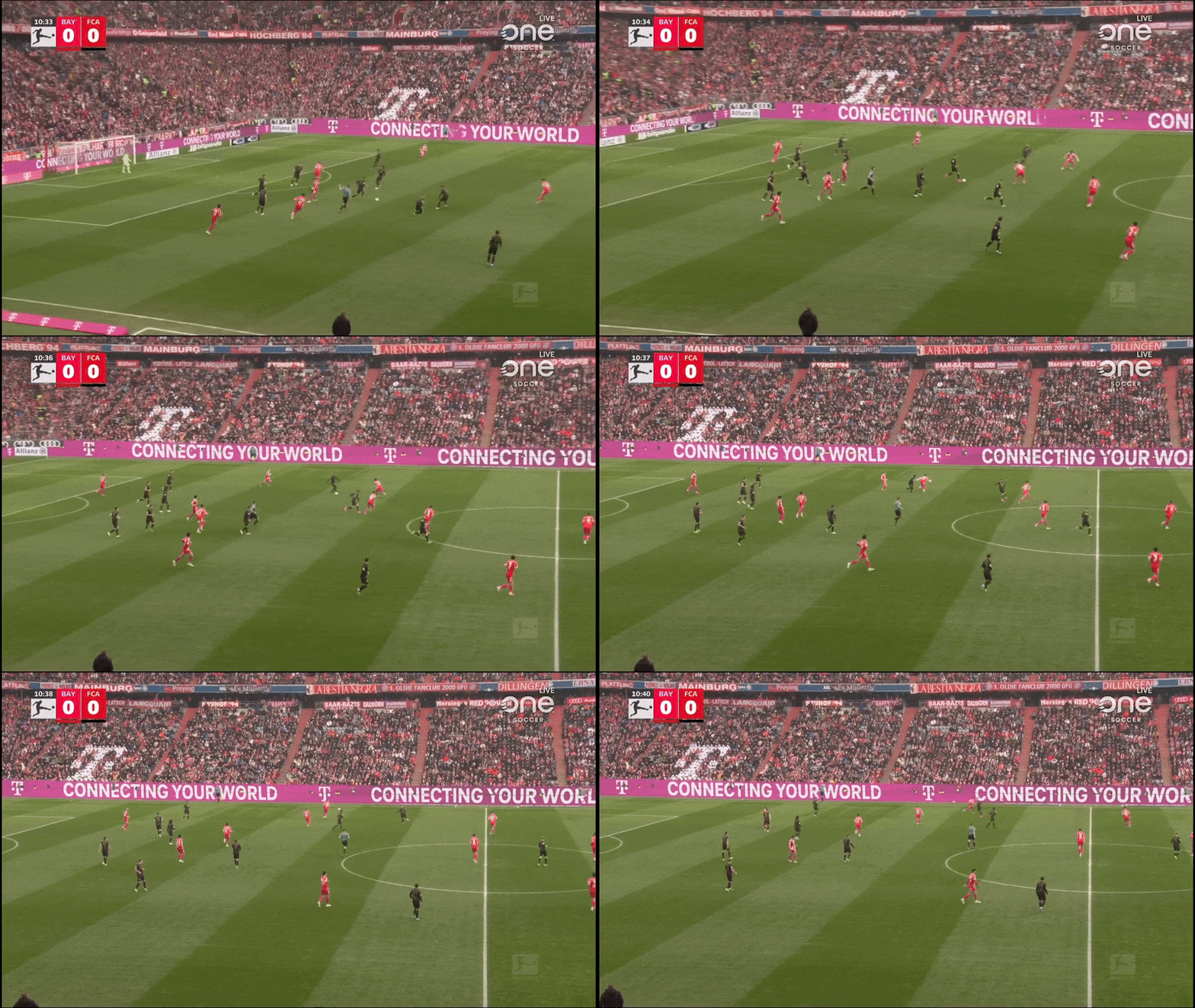
Here's an example of how Davies did well to defend high up the pitch, helping squeeze Augsburg in key areas of the pitch (clip via OneSoccer/Bundesliga)
For a Bayern team that loves to squeeze opponents high up the pitch, often doing so in an aggressive man-marking system, Davies’s defensive aggression didn’t go unnoticed, either. 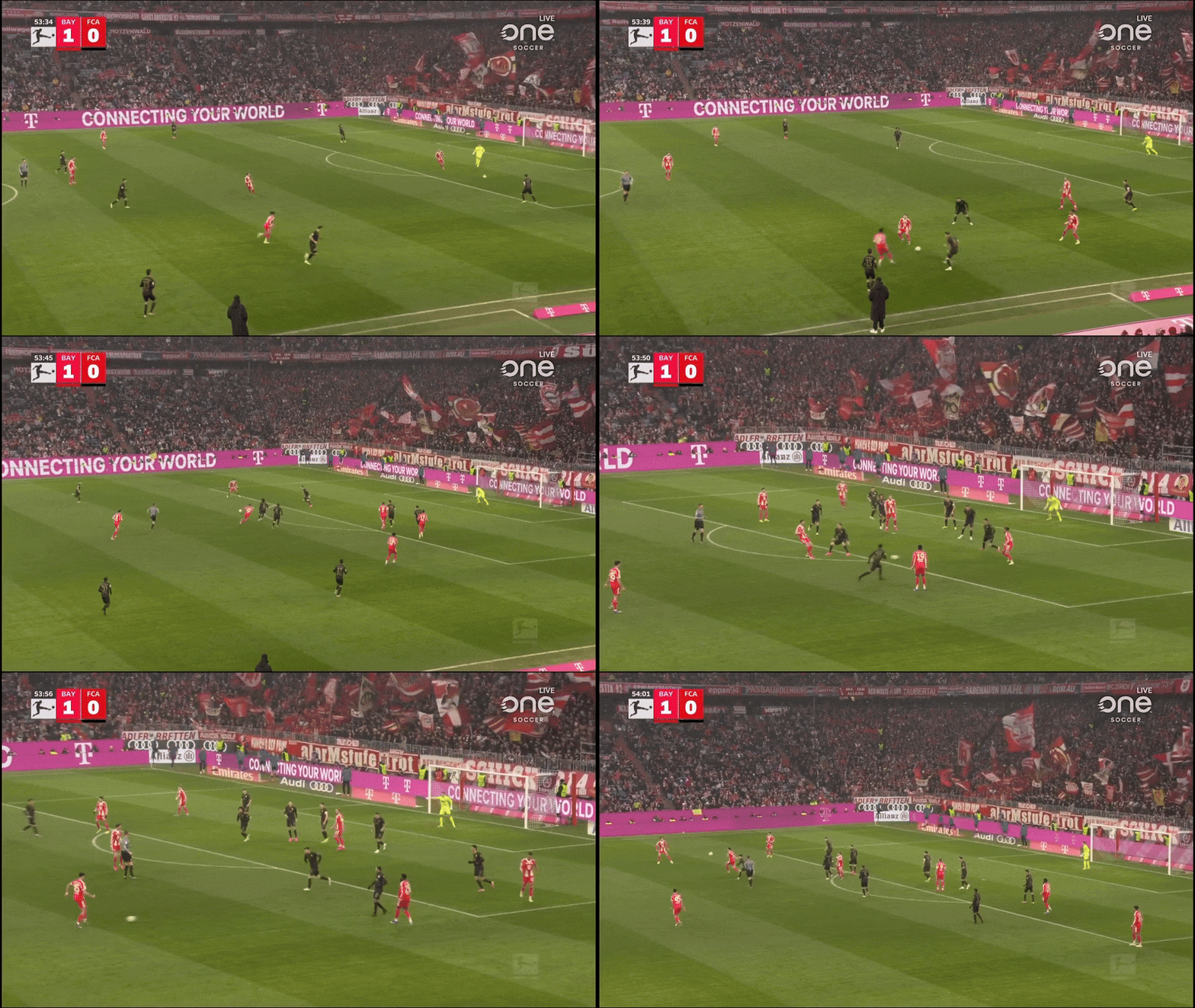
Here's another example where Davies's aggression defensively helped Bayern, as he forced a turnover high up the pitch, nearly leading to a good chance for a team (clip via OneSoccer/Bundesliga)
Unfortunately, however, the trade-off for Davies was that he was clearly not as comfortable on the ball at right back as he typically is at left back, where Bayern has often asked him to do a lot of important ball progression, especially since Vincent Kompany’s arrival.
Thanks to his ability to both overlap and underlap, he’s proven to be quite valuable on the ball when called upon at left back, but he just wasn’t able to be as effective on the right side - at least not in this game. Granted, a large reason for that is the rust that he continues to shake off, yes, but some moments showed why he’s preferred at left back, and why he’ll look to win back a starting job in that position.
For example, take a look at this moment early in the game, as Olise received the ball in a good position, but Davies was hesitant to overlap him, which allowed the defender to hone in on Olise and stop him. On the left side, Davies is unlikely to hesitate with that overlap (or underlap), but on the right, he had second thoughts. 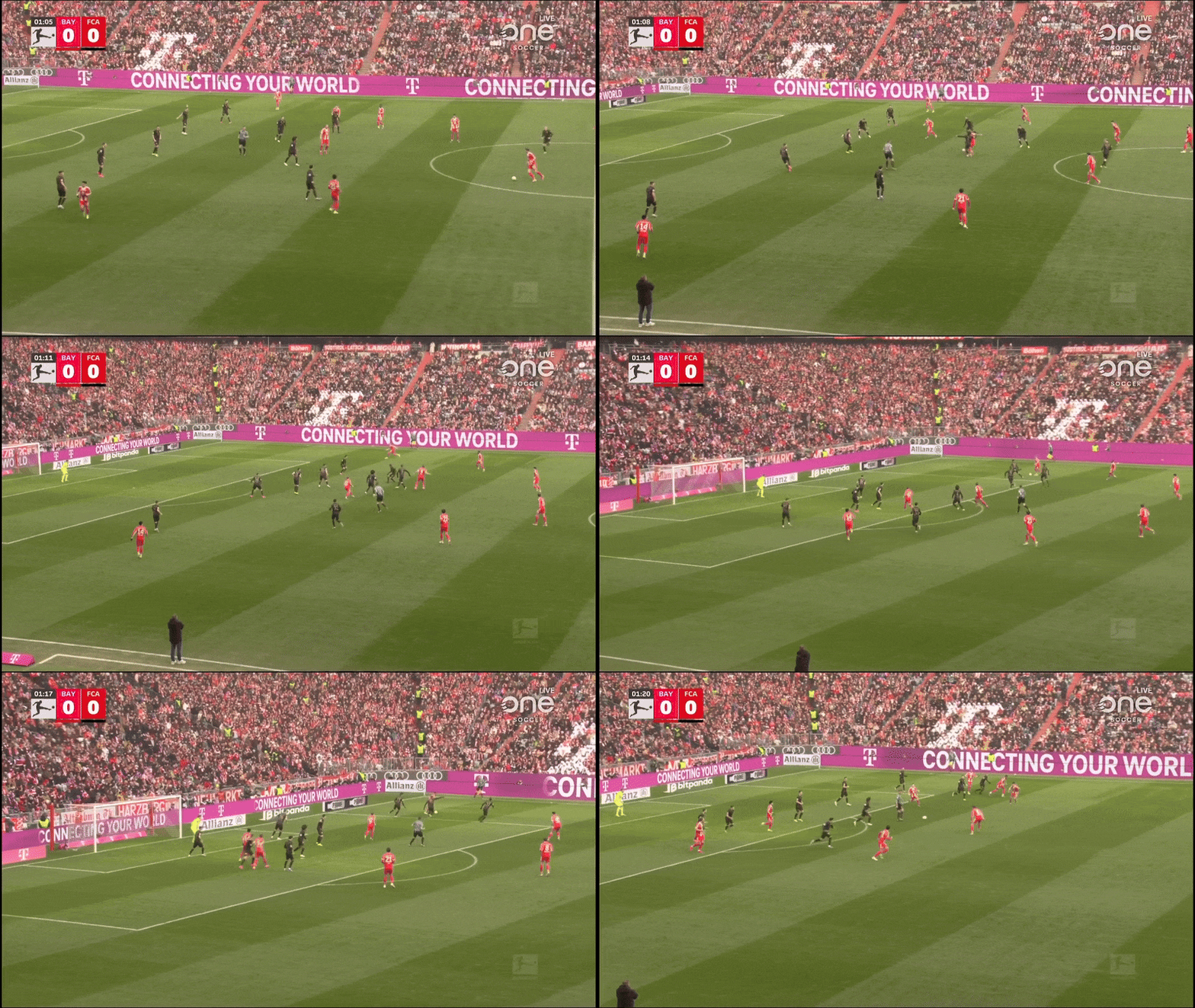
As you can see above, Davies was hesitant to run into space beyond Olise, and that made it tough for his teammate to make anything of this good 1v1 opportunity on the right (clip via OneSoccer/Bundesliga)
To his credit, he did make sure to underlap Olise the next time the opportunity came up, showing that it wasn’t something he was completely uncomfortable with, but it was still a surprise to see that original hesitation, which just isn’t typically in Davies’s game, rust or not. 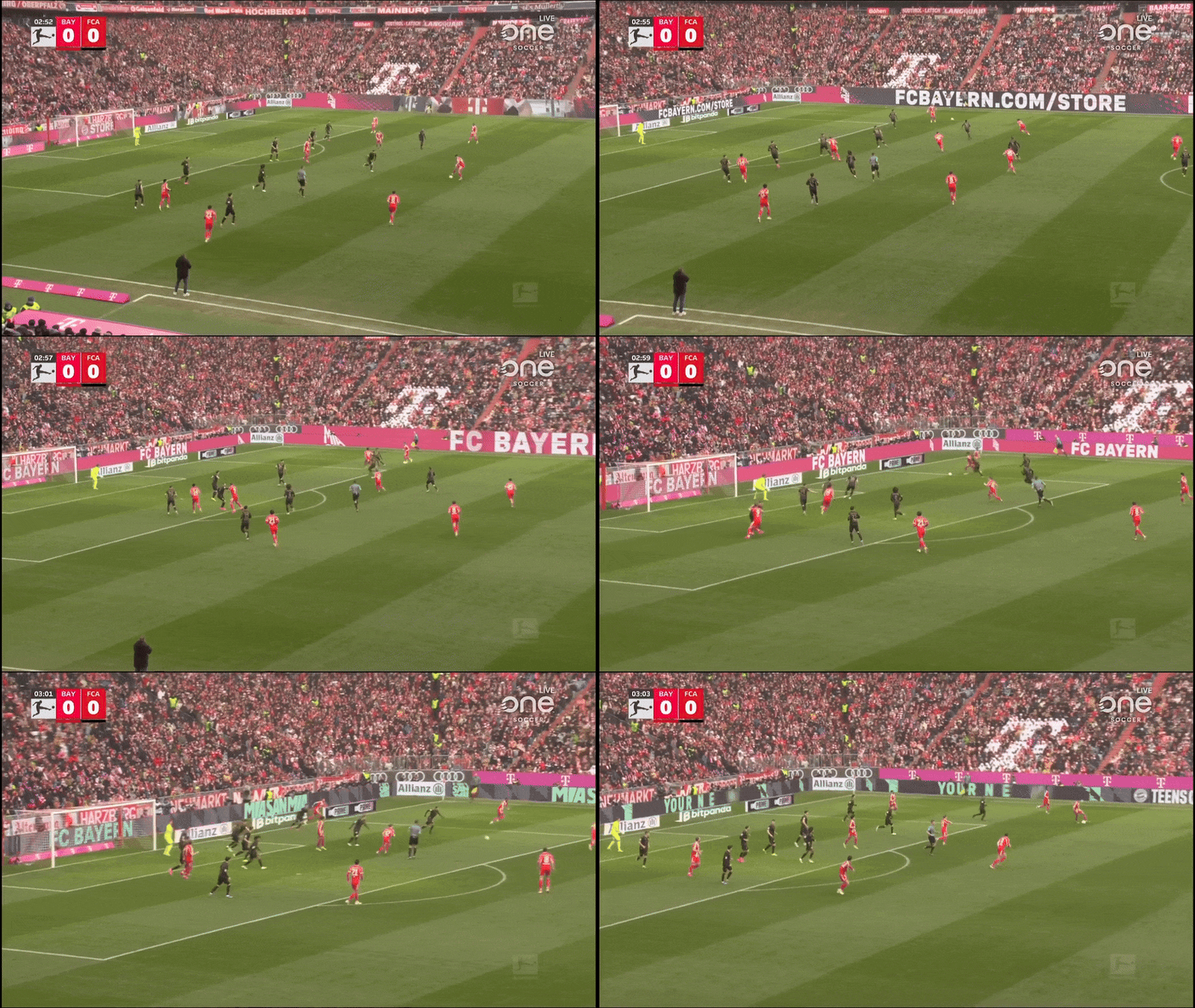
In this clip, though, Davies makes the underlap, and you can instantly see how much it helped Olise to have that support (clip via OneSoccer/Bundesliga)
Yet, that’s the big thing that stood out from watching Davies play at right back - he wasn’t completely uncomfortable there, but he wasn’t fully comfortable, either. There’s a reason why he completed 46 out of 49 passes and two out of four dribbles, even if he was playing in a new position.
Where that lack of comfort stood out, though, was in moments such as his hesitant overlaps, or another evident situation - a lack of risk-taking on his right foot.
Typically, for a full back, they’re asked to open their bodies up the field, opening the possibility for both a pass down the line and into the middle. That’s why full-backs are typically assigned to play on the same side as their dominant foot, so that they can open up their bodies to create that channel down the line.
Because of that, whenever a full back plays inverted, they must be comfortable with opening up their hips and receiving the ball on their weaker foot, allowing them to both pass down the line and cut inside on their preferred feet.
For Davies, though, there were several moments where he didn’t open up his hips and immediately defaulted to taking a touch inside, and that benefited the Augsburg press on a few occasions. Instead of having to drop off to respect the pass down the line, they were able to close that space down, while also taking away passing options in the middle. 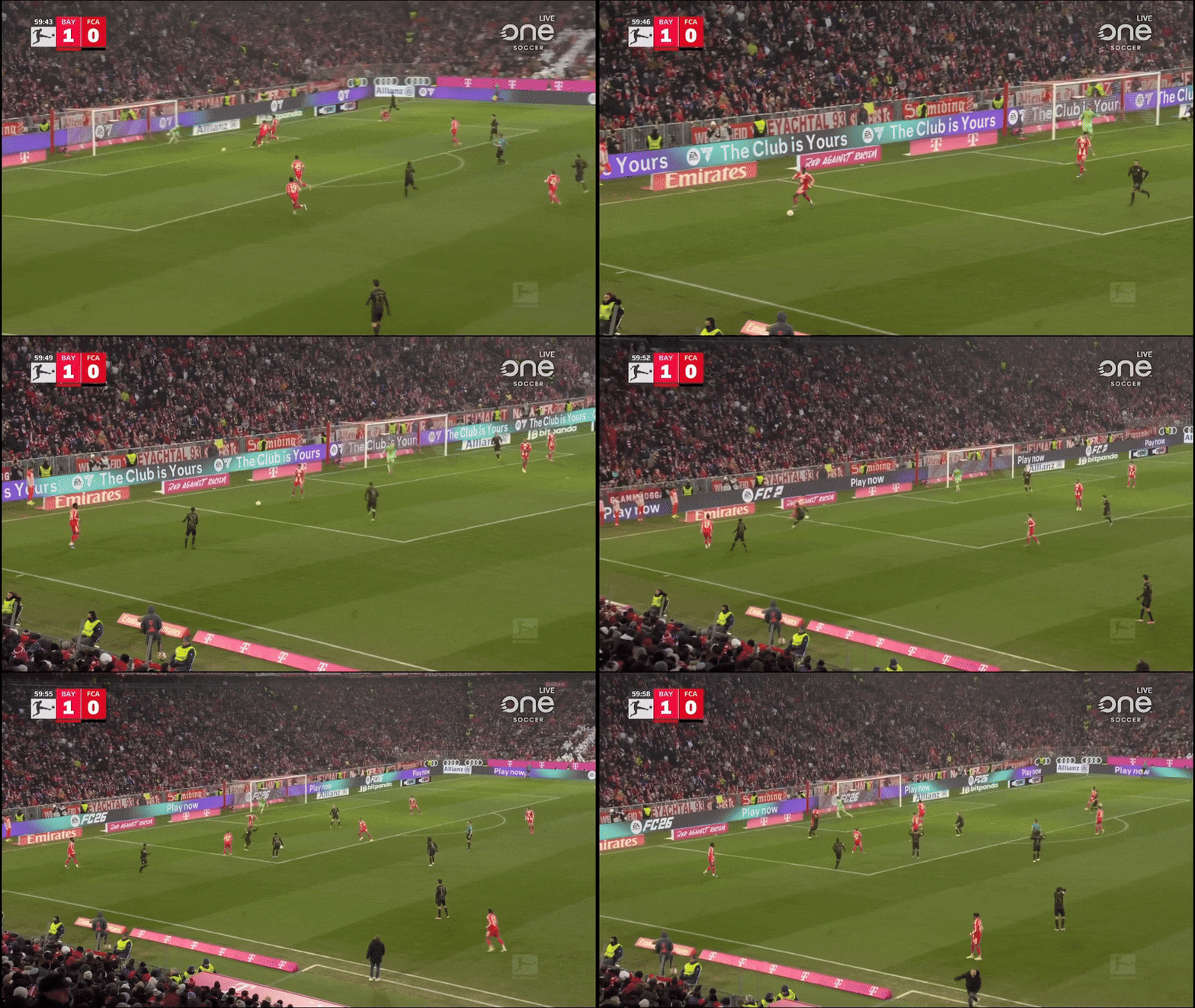
In this instance, instead of playing up the line on his right foot, Davies cut inside onto his left, and that allowed Augsburg to press his teammates, leading to a dangerous turnover (clip via OneSoccer/Bundesliga)
That also occurred in the attack, too, as Davies seemed hesitant to show the ball onto his right foot, which made him a bit more predictable to defend, as he seemed to want to force his way onto his left whenever possible. 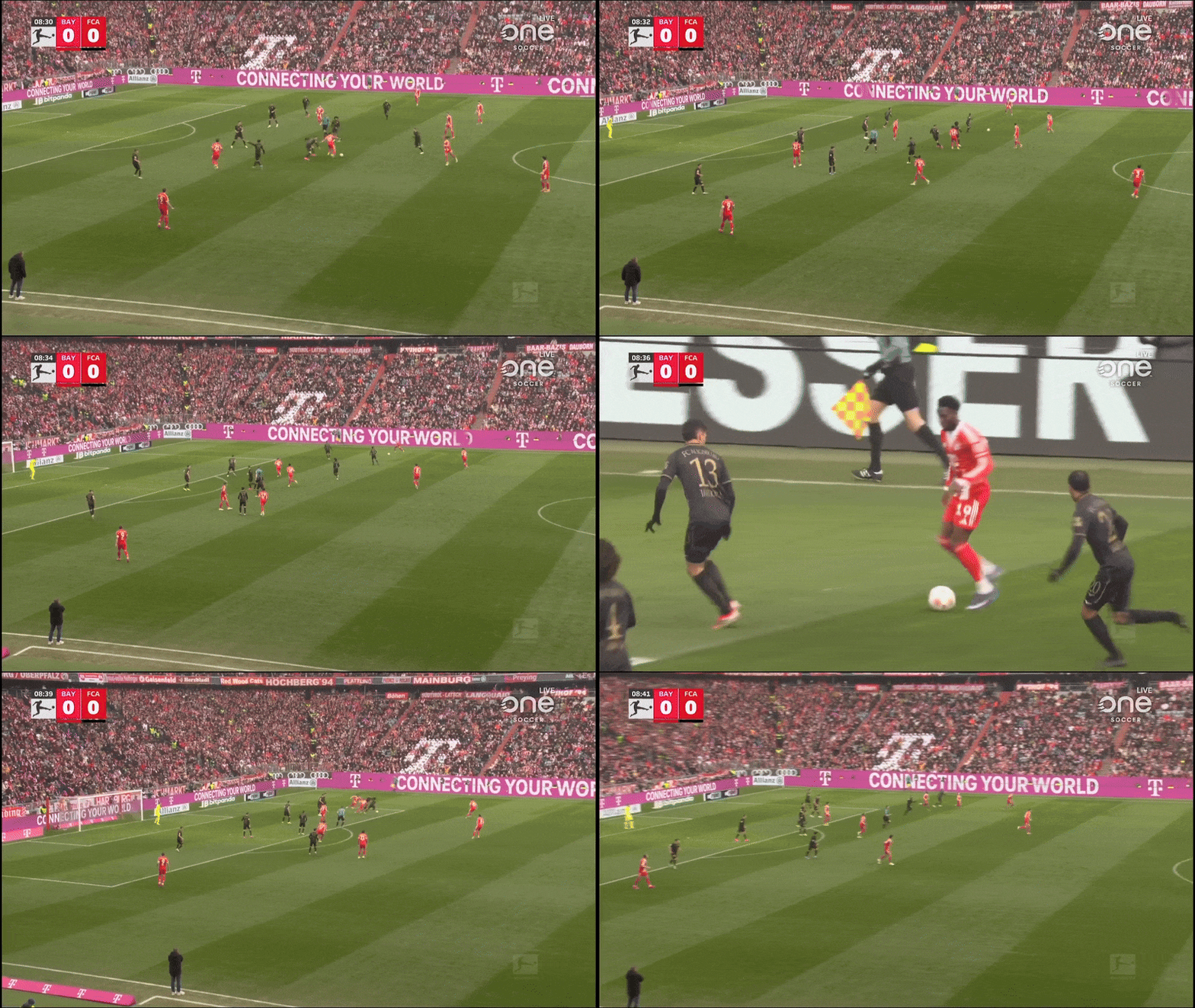
Here, despite being shown the line, Davies tries to find a pass into the middle on his left foot, eventually turning over the ball (clip via OneSoccer/Bundesliga)
To get an idea of how important that is, just look at this next clip - here, Davies did well to receive the ball in the half-space, immediately turning and playing a nice pass on his right foot, which helped spark a dangerous Bayern attack. 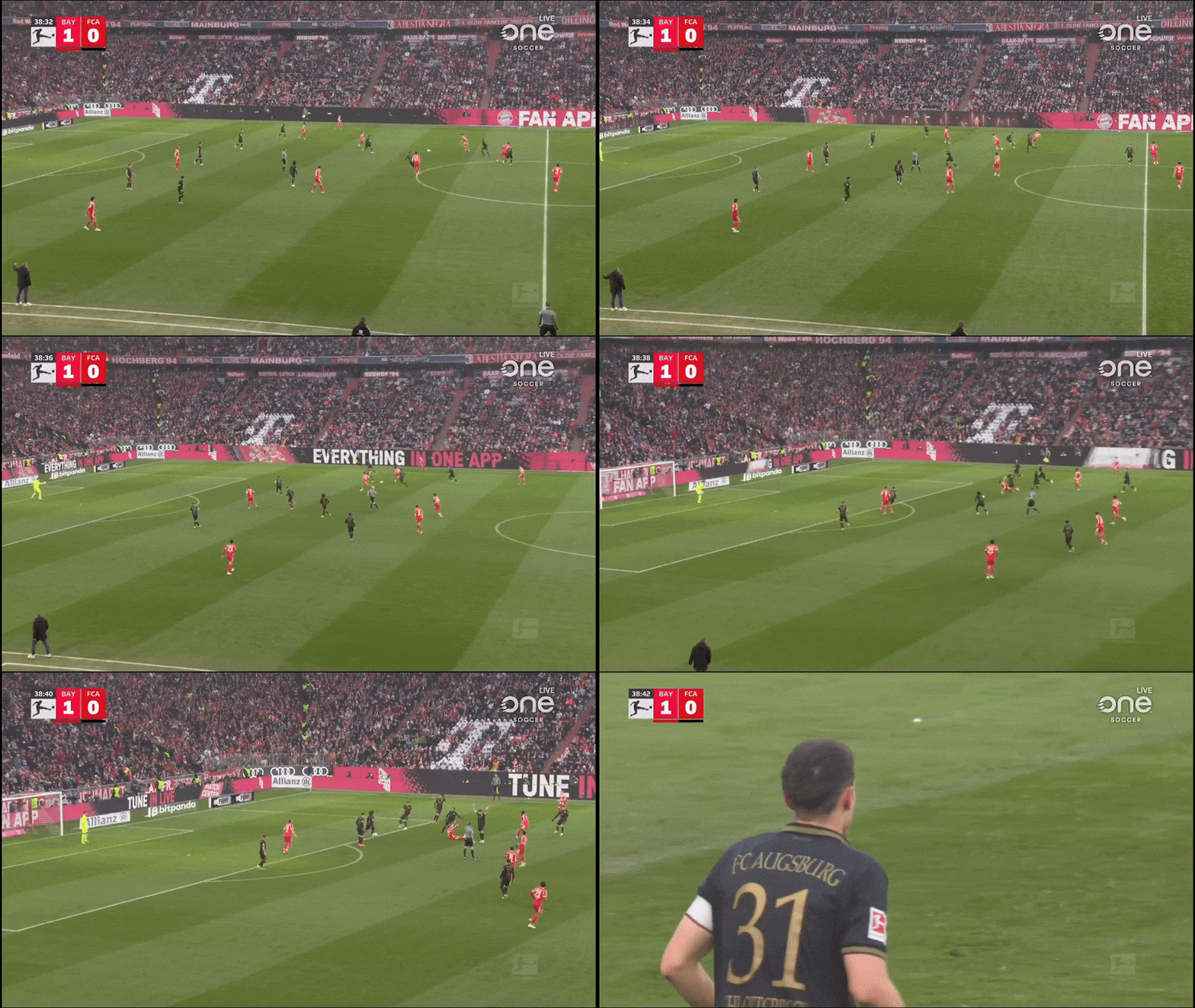
Here, Davies does a great job of receiving the ball on the turn, before playing a pass forward with his right, creating a bit of space for Olise to run into (clip via OneSoccer/Bundesliga)
Had he taken a negative touch and defaulted to using his left, as he had done earlier, that attack would’ve sputtered, but he was able to make a positive turn, and it helped his team progress the ball.
Yet, that shows why Davies was perhaps a bit uncomfortable at right back - while he’s capable of playing with both feet (his right-footed goal against Real Madrid in the 2023-2024 Champions League shows that), his instinct is to receive the ball and play with his left whenever possible.
While that can sometimes be of a benefit on the right side, as he even showed in glimpses throughout this game, there were also moments where it made him look quite uncomfortable. 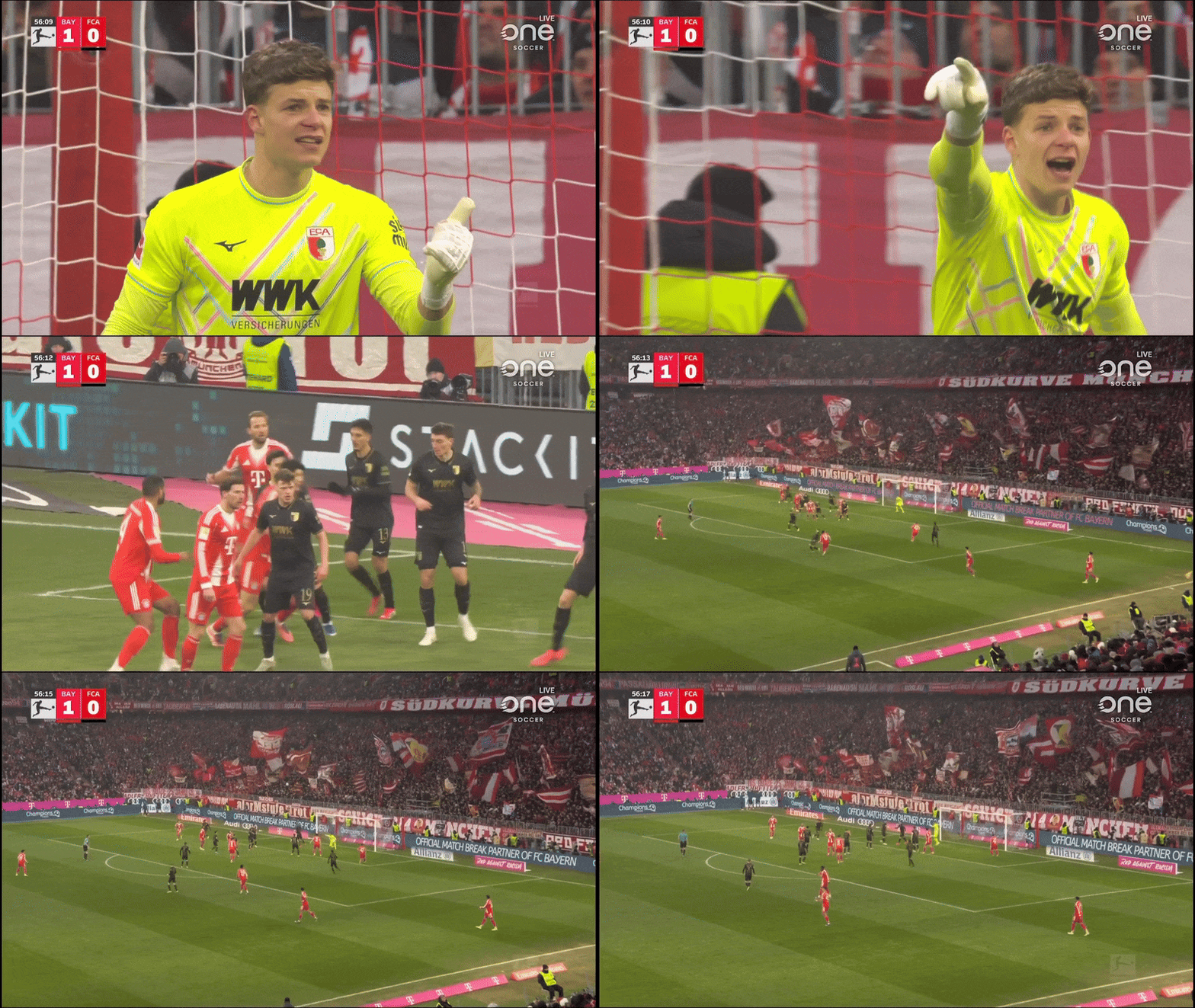
Here's an example of Davies using his left foot to his advantage on the right, as he whips in a dangerous cross off a set piece opportunity (clip via OneSoccer/Bundesliga)
At left back, he doesn’t need to think as much about what sort of passing angles open up for him when he constantly uses his left foot, and that benefits him massively.
Because of that, it’ll be fascinating to see where he slots in for Bayern going forward. Part of the reason he had to play at right back is due to the absence of Konrad Laimer, Raphael Guerreiro, Josip Stanišić and Sacha Boey, who all typically play at that position. With some of those players set to return soon, that’ll leave Davies to platoon with Ito at left back, in a move that will benefit both - Ito, himself, is also just coming back from a long-term injury, so they’ll both be open to sharing minutes as they work up to full fitness.
But if Kompany needs to select one of Ito or Davies at right back again, the signs are that Ito might make more sense - for example, he attempted six long balls against Augsburg, compared to zero for Davies, which is a skill that can be relevant for full-backs playing inverted. If you’re going to be cutting in on your stronger foot, it helps to be able to break the press with long, line-breaking passes, after all.
Plus, when seeing how comfortable Davies looked at left back in his five other appearances that preceded this start, it makes the most sense to keep him there as he works back up to full fitness - even without considering his past left back performances. 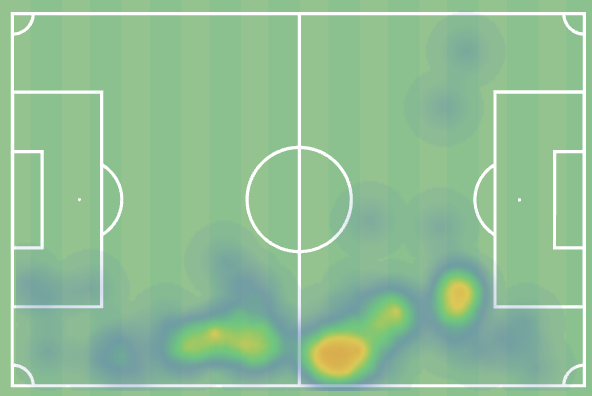
Here's Davies's heatmap from this Augsburg game, showing that he didn't get into the final third as much as expected, when compared to his heatmap from 2024-2025 (WyScout)
Certainly, the CanMNT won’t mind seeing him stay at left back - with Ali Ahmed’s strong performances at Norwich City, Davies looks likeliest to slot back into a left back position for Canada (which is where he featured for most of 2024), so he’ll want to regain that sort of comfort in that position. 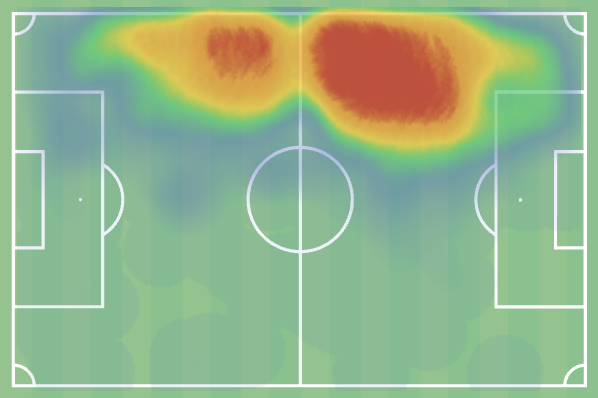
Speaking of that 2024-2025 heatmap... here's what it looked like for Davies. As seen here, he was very active in the final third (WyScout)
Given how dominant a ball progresser he can be in that position, he’ll want to get back up to that level on the ball, while perhaps taking a step forward in his final third contributions, with how Bayern plays. 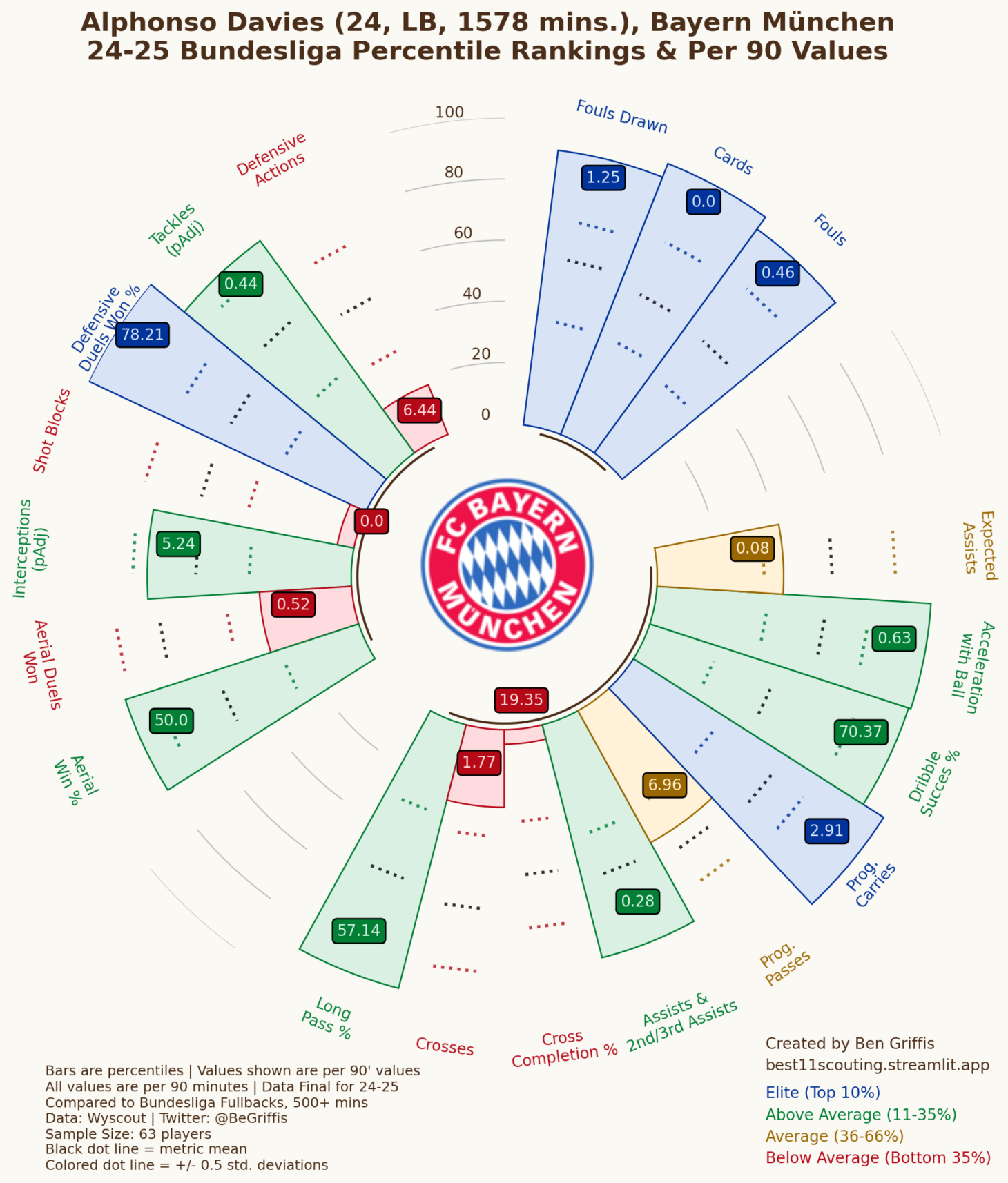
Here's Davies's percentile chart from the 2024-2025 Bundesliga season - as seen here, he was an elite dribbler and duel winner, and a strong ball progresser. Where he'll want to improve is with his final product (WyScout)
Therefore, while it might take some time for him to get up to speed as he returns from this injury, look for him to build on this first start - it’s a credit to how good he’s been for Bayern that a still-solid 60-minute cameo, one where he was played out of position, didn’t quite stand out given his ability to consistently chain together strong performances at left back.
With how good Bayern have been in 2025-2026 - this loss to Augsburg was their first in Bundesliga action - you can only imagine how seamlessly a healthy Davies can fit in, once up to speed again.
You can catch Davies and Bayern Munich LIVE in Bundesliga action on OneSoccer.