KEY TAKEAWAYS: Familiar low block woes crop up for the CanMNT in 0-0 scoreless draw vs. Tunisia


For a fourth straight home game, the CanMNT were unable to pick up a victory in front of their fans, as they drew Tunisia 0-0 at BMO Field on Tuesday.
In a game that was delayed over an hour due to a thunderstorm, Canada was unable to channel the energy of a later start into any offence, despite a lively performance from both teams.
As a result, Canada were shut out for the fourth time in six games (a span across which they’ve scored just two non-penalty goals), as their struggles in front of goal continued.
At the same time, they’ll be pleased they were able to keep a clean sheet, their sixth in their last eight games, as they did well to maintain the defensive solidity they had at the end of 2025.
Yet, that’s the duality of this Canadian team right now. In their own box, they’ve continued to be solid, even despite a never-ending stream of defensive injuries (which didn’t stop in this window), but they’ve struggled to find any consistent success offensively, especially against teams who sit back against them - as Tunisia did.
Heading into the World Cup, finding a way to maintain that defensive solidity while injecting some life into the attack remains a goal - although Canada appears no closer to achieving that objective than they did before the start of this window.
With that in mind, here are three KEY takeaways from this one.
Low block woes crop up again for Canada:
It was an awfully familiar sight for Canadian fans - as the game wore on, Canada continued to push and push for a goal to break the deadlock, but faced stiff resistance from Tunisia’s defensive block.
Despite Canada’s best attempts to get the ball out wide and then into the box, Tunisia offered stiff resistance at every turn, and eventually, they were rewarded with a clean sheet.
They were made to work for it, to be fair, as Canada held 58% of possession and generated 14 shots, but in the end, Tunisia were able to survive that threat - and rather comfortably, given that Canada generated just 0.875 xG from those 14 attempts (an average of 0.06 xG per shot). (OPTA)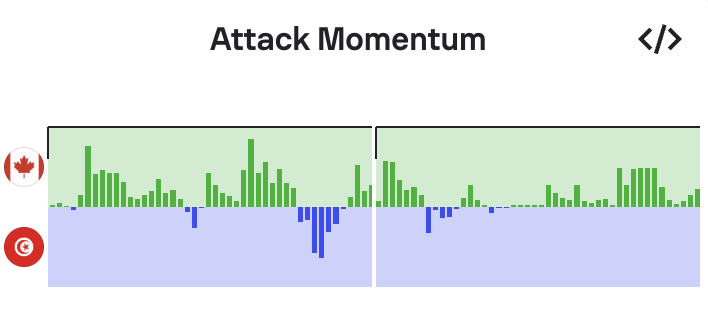
Here's the attack momentum chart from this game, showing how much of the game Canada spent on top in possession - despite their lower offensive output (SofaScore)
Yet, that was the story of this window for Canada.
While they did well to score two goals in a 2-2 comeback draw against Iceland on the weekend, both of those goals came from the penalty spot - they otherwise generated 1.625 non-penalty xG on 27 shots in this window (also 0.06 xG per shot), helping give an idea of how bad their offensive woes were (OPTA).
Of course, it can be argued that they won those penalties through swift attacking play, which was certainly the case, but even that doesn’t help erase the concerns that this team faces - their issue hasn’t been in getting to dangerous areas, but what they’ve done with the ball when they get there, instead.
Given that this has been an issue that has plagued Canada for a while now, that’s a huge worry, as they haven’t come any closer to finding any solutions to solve that problem. That they completed just 11/45 crosses (24%) this window further shows that.
Despite their scoring woes, though, they’ve not tweaked a whole lot in the attack in terms of their set-up, even if they’ve played around with their personnel a bit, and that’s made them quite predictable to deal with.
For example, head coach Jesse Marsch has continued to employ his familiar two-striker system, which, while beneficial to his team’s high press, hasn’t yielded the intended effect that one would expect such a system to have offensively. That was the case again in this Tunisia game, as evidenced by the numbers, as well as the fact that Jonathan David, Canada’s star attacker, finished with no shots.
To be fair, David’s partner, Tani Oluwaseyi, was quite lively and should’ve scored - he generated five shots worth 0.413 xG - but that kind of speaks to the issue Canada has had.
Here's Oluwaseyi's shot map from this game, showing that he occupied good areas even if he couldn't finish those chances (SofaScore)
Now, in 29 games under Jesse Marsch, Canada has gotten just six goals from strikers not named Jonathan David, which is a big worry considering that Canada has played with two strikers in almost all of those matches (and for context, midfielders Ismaël Koné and Nathan Saliba, along with full back Niko Sigur, have six goals across that span).
And it doesn’t help that the striker not-named Jonathan David who has scored the most under Marsch is the currently injured Promise David, who has three goals for the CanMNT, with Oluwaseyi sitting with two and Larin with one.
If this was all happening and Jonathan David were scoring, you could live with the woes the other strikers are having, but given that David now has just one non-penalty goal in his last nine appearances, that problem looms a lot larger, especially after David’s shotless appearance in a Tunisia match where he also had just five touches in the box (just days after he had five shots and 11 touches in the box against Iceland). 
Here's Jonathan David's heat map from this game - ideally, you'd want to see him on the ball closer to the box (SofaScore)
That’s not to say that David can’t do well in a two-striker system, as shown by the Iceland match and his overall strong scoring record under Marsch (he’s scored 13 of Canada’s 36 goals since Marsch’s arrival), but his woes as of late offer more evidence why it could be worth at least exploring a potential change in Canada’s offensive set-up, such as a move to push David up as a lone striker in a 4-2-3-1.
To further dive into the worries about Canada’s lack of adjustments, for example, it must be noted that of David’s 13 goals, 10 came in Canada’s first 21 games under Marsch, which is no small detail.
What that shows, perhaps, is that opponents have adjusted and found ways to nullify what was working for David before in the two-striker set-up, especially when sitting back in a low block. And considering that it’s not just the goals that have dried up for David, but his touches in the box and shots, you can’t help but wonder if that’s the case. 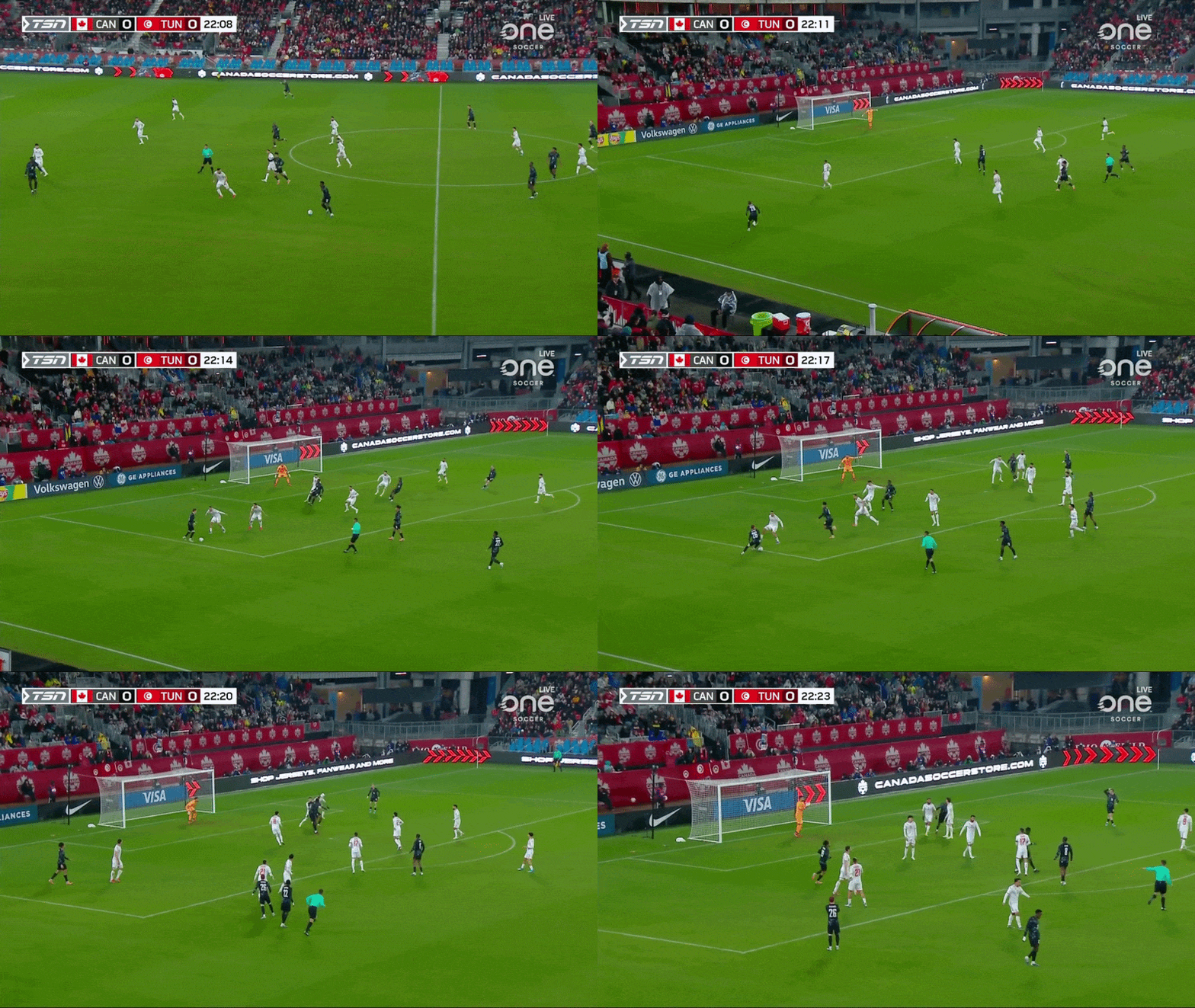
Here's a play where Jonathan David shows good creativity in the box after a great cross from Marcelo Flores to tee up Tani Oluwaseyi. When seeing this, you can't wonder about what he could've done if he were the one receiving this sort of chance (OneSoccer/TSN)
Now, it’ll be up to Canada to respond to that with adjustments of their own. That can be a switch in formation, a switch in personnel, or something else, but they’ll have to do something ahead of the World Cup - their attempts to stick with their status quo in attack have mostly proven to be fruitless lately.
With Canada’s ongoing struggles in front of goal, they’ll have to expect a steady dose of low blocks from their opponents going forward - you have to imagine that Group B sides Bosnia & Herzegovina and Qatar definitely employ that sort of set-up, at the very least, with Switzerland likely to follow based on how things are trending for Canada - so it’ll be up to the Canadians to adjust to that reality.
Given that they’ve only got two more friendlies before the start of the World Cup, however, you have to wonder if these games were once again another missed opportunity to experiment as they chase solutions for those woes, especially given that they don’t seem any closer to finding the answers to the problems they are currently facing. 
New faces help power strong start:
In an attempt to both freshen up the team after a slow start against Iceland and to audition some players, Marsch went with a bit of a different lineup to start this game, much to everyone’s surprise.
While Maxime Crépeau, Ismaël Koné and Tani Oluwaseyi were all expected to slot in, three new faces stood out in the starting XI - Liam Millar, Marcelo Flores and Ralph Priso. In particular, the last two names were quite huge to see, given that this was their first starts for Canada, and that they’re two names that have pushed hard to be in Canada’s World Cup squad with their play at the club level as of late.
To Marsch’s credit, his changes worked wonderfully, too, as Canada started this game very brightly. They did a good job of pressing Tunisia high up the field and had some decent spells of possession.
And, more importantly, Millar, Flores and Priso were three of their brightest players, too.
Here's the sort of direct play Jesse Marsch wants to see from Liam Millar - front-footed, and direct (OneSoccer/TSN)
At the back, Priso was a commanding force, doing well to build on the dominant performances he’s been putting up for the Vancouver Whitecaps, while Flores and Millar were tricky, direct and dangerous on the wing, with Flores doing a good job of cutting inside and causing problems with his dribbling, while Millar did well to stretch the field and whip in crosses. 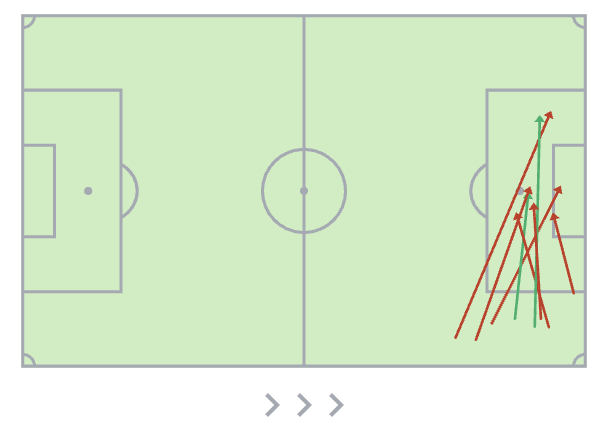
It wasn't all perfect from Liam Millar, who struggled with his crosses, although this shows his ability to get to good areas of the pitch with the ball (SofaScore)
That’s key, as that’s exactly what you want to see from players who are pushing to be included in Canada’s World Cup squad (as is the case for Flores and Priso), or to earn a bigger role in the squad (as is the case for Millar).
WHAT A SAVE! 😳
— OneSoccer (@onesoccer) April 1, 2026
Liam Millar spares the CanMNT's 🇨🇦 blushes and stops a 2-on-1 from Tunisia with a sliding block 😎
0-0 at HT in this one: 2nd half coming up next on OneSoccer & TSN 🔴 pic.twitter.com/mA9fAFrBmQ
Unfortunately for Canada, though, not all went well early on. For a team already suffering with injuries to their top centre-backs, it was a huge worry to see Priso withdrawn after 26 minutes with a hamstring issue, given how good he had looked in the early proceedings of the match.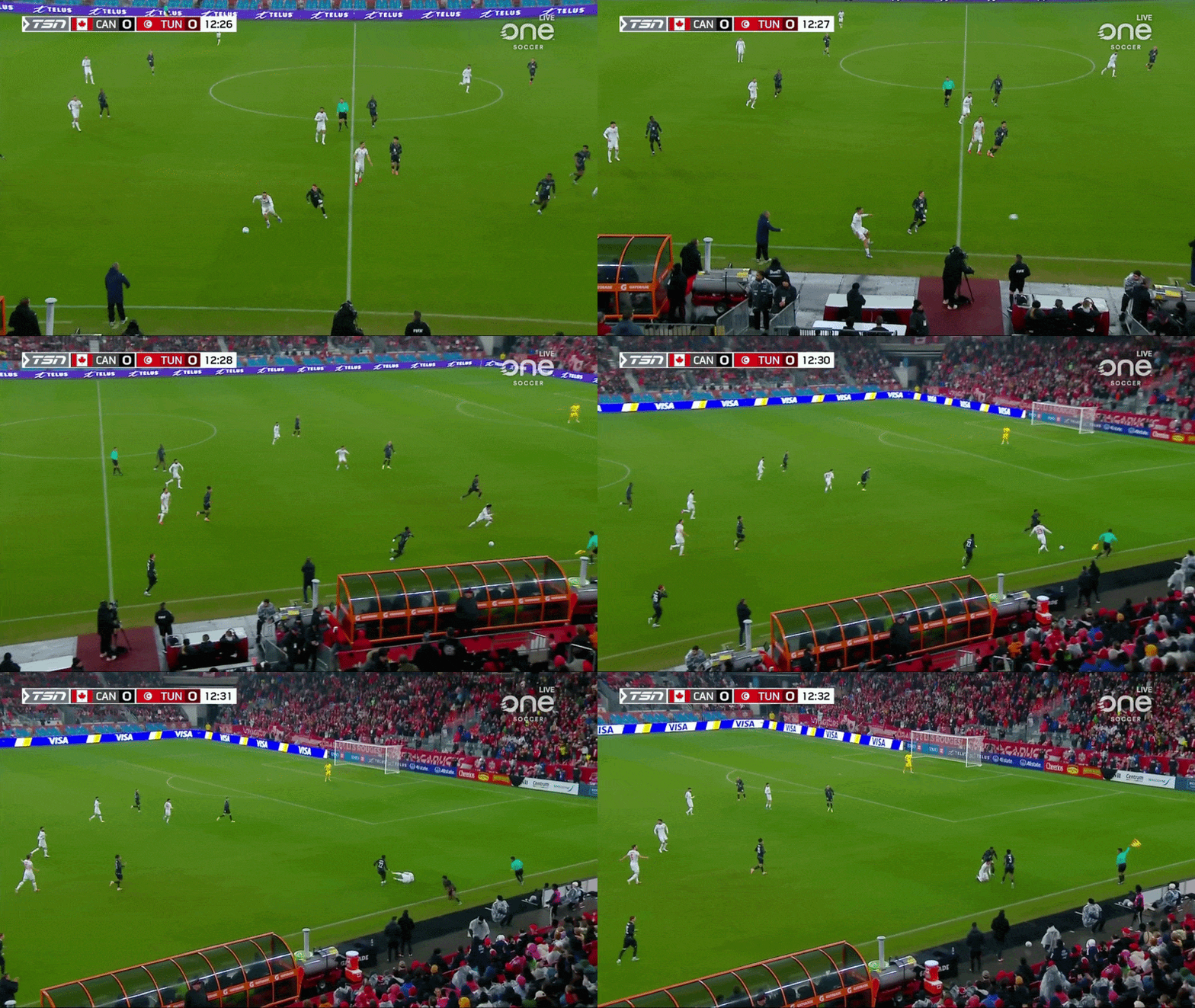
Here's an example of Priso using his recovery pace to make a big tackle in transition for the CanMNT (OneSoccer/TSN)
Not only did Canada struggle a bit defensively after he came off (they were lucky not to concede or earn a red card off a wild sequence of events from Joel Waterman and Kamal Miller at one point, as an incredible Millar block saved the day there), but they also missed the tempo Priso brought on the ball. 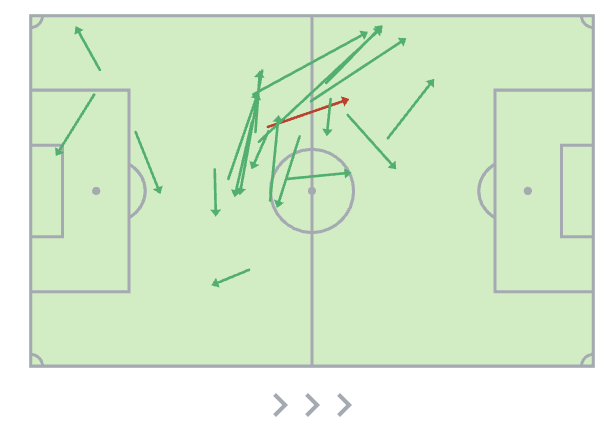
Here's Priso's pass map on the game, showing the important work he did to get on the ball and progress it (SofaScore)
Because of that, it’s hoped that the recovery timeline on his hamstring injury is not a long-term one, as this Canadian team could use all the good news it can get when it comes to its defenders right now. 
Here's another example of Priso using his speed to make a big defensive play - unfortunately, this is where he also hurt his hamstring (OneSoccer/TSN)
Other than that, though, Marsch can be pleased with how his team started this game, with the lone complaint being that they would’ve perhaps liked to see them capitalize on some of their earlier chances, such as the one that Tani Oluwaseyi blasted over the goal from close range.
After uncharacteristically struggling in the first half against Iceland, this was a return to their usual identity, which sees them start games quite well - usually, finishing them has been where they’ve struggled, which was the case a bit again in this game. 
World Cup stock watch:
Now, the next time Canada takes the field in June for friendlies against Uzbekistan and Ireland, they’ll know what their World Cup squad looks like, so it’ll be fascinating to see how the next six to eight weeks go for them.
For example, the big thing to watch will be the recovery of certain players from injuries, such as Alphonso Davies, Moïse Bombito, Stephen Eustáquio, Alistair Johnston, Promise David, Alfie Jones and Jacob Shaffelburg, among others. In particular, the health of Davies, Bombito and Eustáquio will be stories worth watching, as having that trio back could make a massive difference for the hopes and ambitions for this Canadian team.
For now, though, Marsch will evaluate what he and his staff learned about those who played this window, as there were some interesting developments worth monitoring.
Naturally, the big one was Flores’s emergence, as he was arguably the biggest bright spot across both games with his energy and desire on the ball.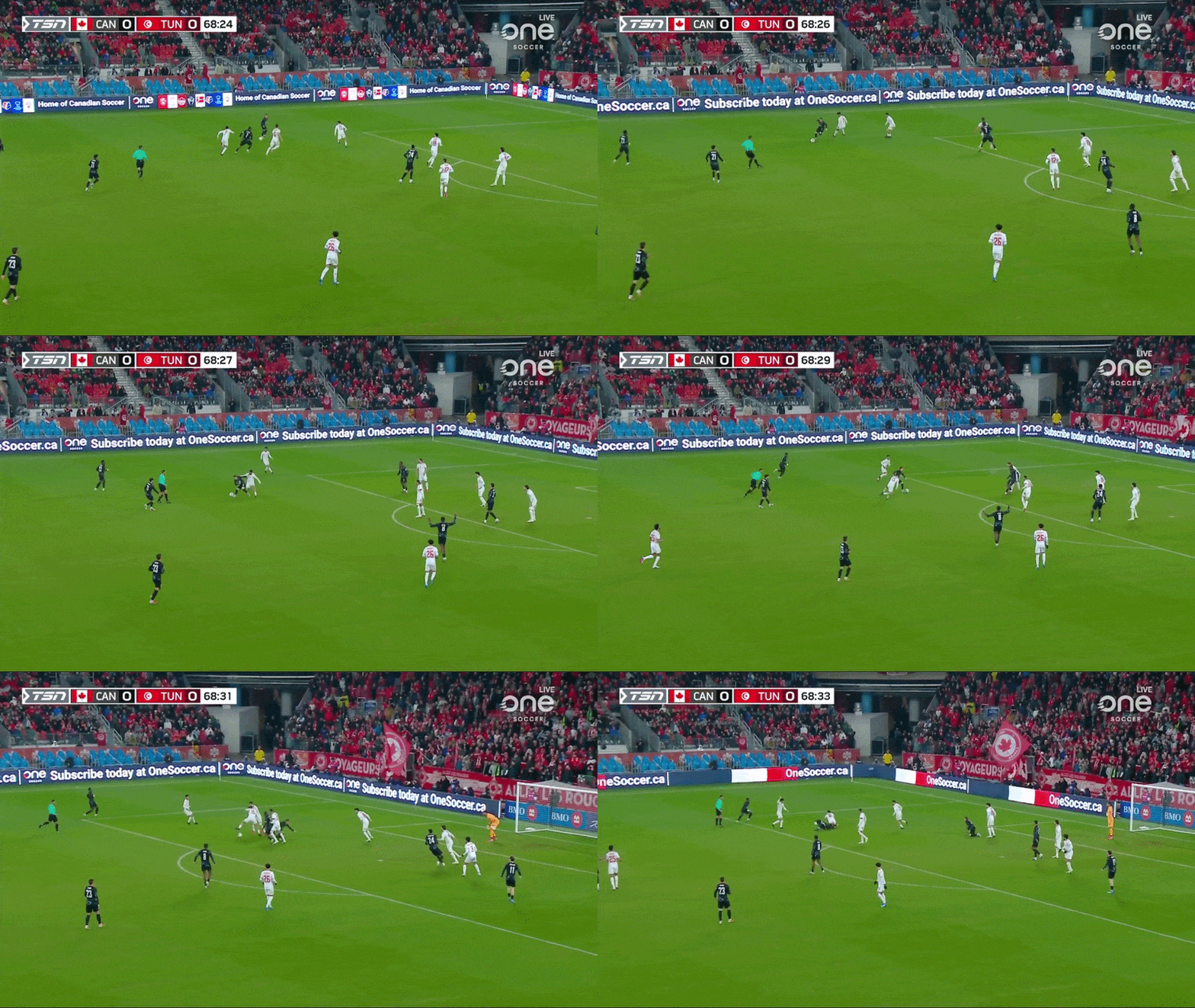

Here are two plays where Flores got on the ball and drove it towards the box, helping create dangerous attacks with his mentality and desire on the ball (OneSoccer/TSN)
Could he have been better in the final third? Absolutely, but he showed why his unique profile could be a much-needed addition to this team’s attack, significantly improving his odds of being included in the World Cup squad. 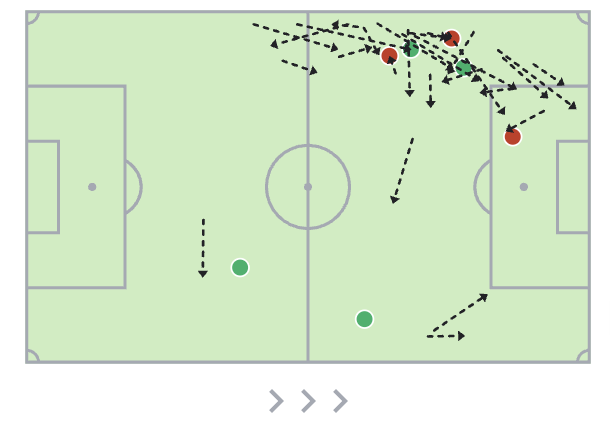
Here are all of Flores's dribbles and carries from this game, with his carries in black, and his dribbles in green (successful) or red (unsuccesful)(SofaScore).
Otherwise, Jonathan Osorio was another big winner from this camp, as the veteran midfielder had two very good cameos off the bench. Often, it’s remained unclear where he fits in this team, but if he can bring that sort of poise off the bench in World Cup games, you have to think he’s an option to make the squad - and that’s without considering the leadership he’ll bring to the locker room, too. 
Here's a sequence where Osorio showed his class on the ball to create a dangerous chance (OneSoccer/TSN)
Lastly, it must be noted that Daniel Jebbison had two bright cameos, as he was able to be a lot more impactful and noticeable off the bench than he’s been in past appearances. His form has been mixed at the club level, but if he can build off this camp and find some rhythm there, you have to think these performances will have improved his World Cup odds significantly.
On the flip side, it’s worth noting that a few players also saw their stock dip. In particular, centre-backs Kamal Miller and Joel Waterman had some issues when paired together, which led to Canada conceding two goals against Iceland - and they were unlucky not to concede against Tunisia.
Both have done well when paired with players higher up the depth chart, but together, it didn’t seem to work out - granted, if Canada is playing World Cup games with the pair of them, that would mean a lot of bad things would have happened given that there are four centre backs in front of them on the depth chart (and Priso’s form has suggested he could perhaps be the fifth best option at the position right now).
Otherwise, while this window wasn’t necessarily a bad one for Cyle Larin, it felt like a missed opportunity for him, given his form with Southampton, as he was unable to make the most of his start against Iceland. Had he scored in that game, that would’ve been a big boost for his hopes of starting at the World Cup, even if his spot in the squad appears pretty safe after his recent good run of form.
Now, a lot can change between now and when Canada’s World Cup squad is named - both in terms of the form and the health of players, so it’s not as if all of these performances will fully determine the fate of these players. But, in a world where Canada’s squad is deeper than ever, those can be the margins that could make a big difference when Marsch has to make a final decision, which is why it was worth highlighting some of the individuals who stood out, be it positively or negatively.